Off Tempo: A Conversation with Andrés Botero Giraldo on Vancouver’s Underground Electronic Scene

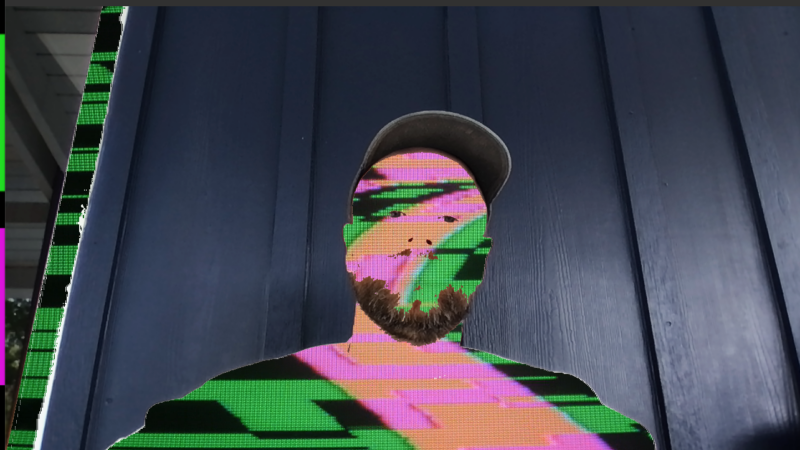
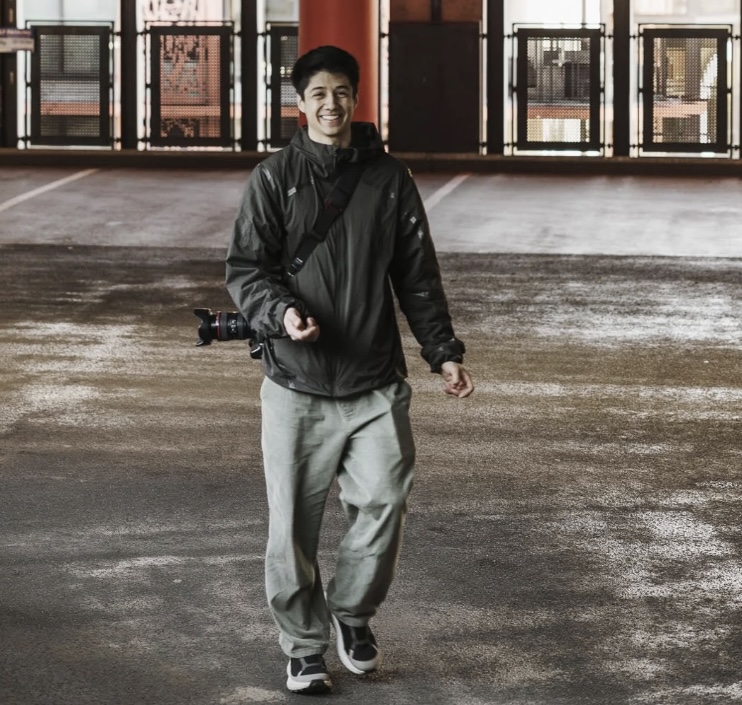
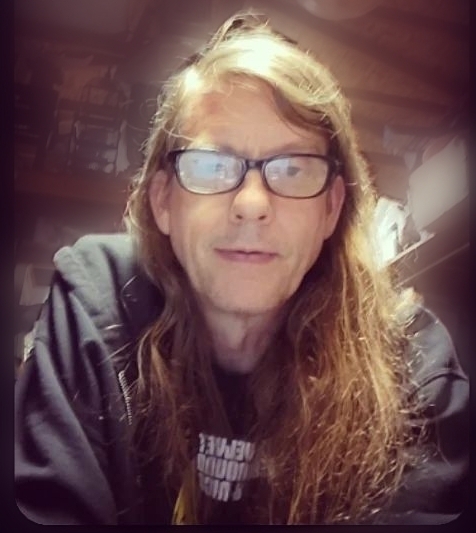
Image of Andrés by @halle_adrian

(Photo credit: @halle_adrian)

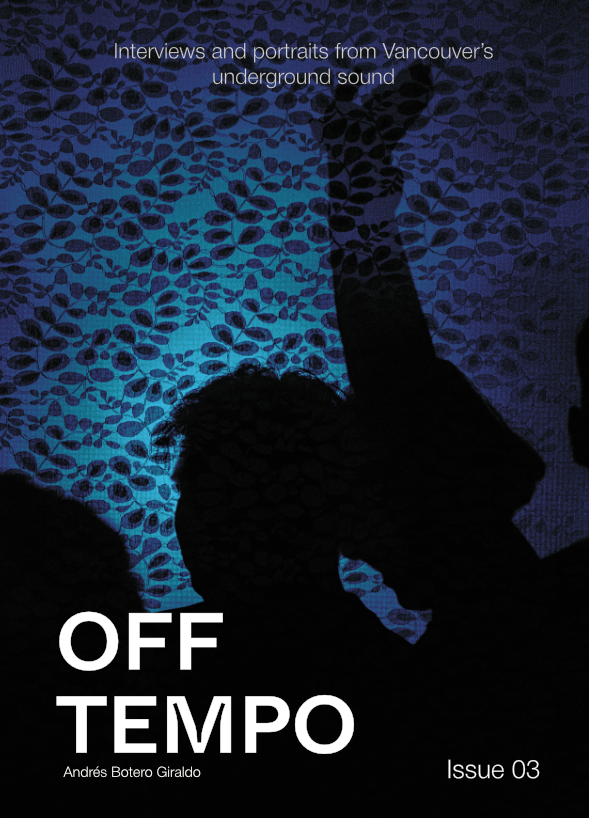
A few weeks back, Chris and I (DJs CG+E) had the pleasure of interviewing Andrés Botero Giraldo, a photographer and zine creator based in Vancouver, BC, for Missed Connections. Andrés is many things, but maybe most importantly, he’s a music nerd deeply embedded in Vancouver’s underground house and electronic music scene, which he explores in his zine, Off Tempo. There’s only so much you can cover in an hour, so we decided to post the long-form interview with Andrés here on the Freeform blog. 

He came through with a killer set of all-Vancouver producers, and we spent the rest of the time geeking out about the scene up there, the labor of love behind making a physical zine (in a digital world), and what it means to document a community you have to show up to find.

If you’d like to listen to the episode, you can find it on MixCloud. And to see more of Andrés’s work, here’s a link to his site.

Note: This transcript has been edited for readability. 


So, Andrés, tell us a little about yourself. How’d you wind up in Vancouver?

I came here straight from Colombia in 2021, September—from Medellín, right in the middle of COVID. I actually missed my first flight because I took the wrong COVID test, which was a fun start. But I made it, like three days late for school. I took 3D animation for CG film and video games. First year I was having fun, second year I specialized in 3D modeling and building assets digitally.

I graduated in April 2023, and that’s when the entertainment industry in Vancouver—really all of North America—fell off. Layoffs, strikes everywhere, barely any job offers. Senior artists who had jobs were losing them, and they were applying for junior roles. So for us as new graduates, it was even harder. I tried for about a year and a half, and honestly, I wasn’t really enjoying 3D as much by that point anyway.

I’d started working at a climbing gym part-time in 2022 because I found out about bouldering and fell in love with it. I got hired in education, teaching little kids how to climb—zero experience teaching, by the way—and eventually moved to the front desk. I picked up a camera in 2020, started taking photos of friends bouldering out in Squamish, and that just kept growing.

Then I started volunteering for a clothing designer named Dana Lee Brown. She’s based on Bowen Island, does this incredible farm-to-loom work with organic fibers sourced from North America. I was spending my Tuesdays there learning about textiles. So now it’s the zine, part-time at the gym, and I’ve been sending emails to labels and music media to see if there’s a fit somewhere. I’d love to work in music—not producing it, but the media side of things.


How did you first connect with the underground music scene in Vancouver?

Late 2022 is when it happened. I actually went to see Tiësto in Atlanta first, and that kind of sparked my interest in finding more shows. Then I came back to Vancouver and saw MK (Marc Kinchen), which was great. But the real moment was at a Discothèque show. They’re a promoter collective, really nice people, some of my good friends now. There was this DJ on the lineup, DJ dood—her name’s Elsa—and she played this Kerri Chandler track called “Atmosphere.” The original version is called “Track One.” And once I heard that, I was like—this is it. I knew that track. I’d heard it before. But hearing it live in that room? After that night, I knew: I love house.

The second event I went to was Juan Atkins and Delano Smith. OGs of Detroit techno. That show opened up a whole different side of the sound. 

I’ve only been here five years, so I’m not someone who can speak on the full history. But being in those places, and then hearing what’s come in the last two years—music doesn’t change, I think you just discover new sounds and you start to alter what kind of events you want to go to. There’s a lot happening in the city, and there’s still a lot I haven’t explored. There really is something for everyone.


What’s unique about the Vancouver scene right now?

A lot of people say getting into it is either something you seek out or something that finds you. A friend brings you to a show, you end up liking it, and maybe you start going to more. But you also have to give it a shot. I used to listen to Skrillex, David Guetta, Martin Garrix. And there’s nothing wrong with that. As Max Ulis says in the zine (Off Tempo), it’s a point of entry for people to discover the underground sound. Vancouver’s the same way: it’ll find you.

What’s really important to say is that people in this scene make things for the community, not for profit. You compare these spaces to the mainstream clubs on Granville Street (except Gorgomish, amazing place btw)—those places are playing Top 100, where people go to get drunk, whatever. But that’s not what we’re looking for. We’re looking for a sound. And honestly, a lot of people don’t feel safe in those bigger clubs. 

House music comes from gay culture—that’s the community that brought the music—and I don’t think that side of things is always respected in mainstream spaces. Where people do feel safe is in the more hidden venues, the ones that actually care about people’s safety and bring good curation for the sound.

Lately in Vancouver, there’s a tough situation happening. The VPD and fire department are kind of joining forces to shut down underground and DIY venues that don’t have full legal permits. They say it’s related to the FIFA World Cup coming, but a lot of people don’t buy that. It feels more like clearing the way for venues that will bring in money. 

Resident Advisor actually ran a piece about it. There’s a venue called Fortress, run by a woman named Crystal, that does it right—limited capacity, legal status, community talks during the week, shows on the weekends. But even there, cops showed up during a show in December. It’s been going on for two or three years now, and it’s really sad.


There’s a tension between the underground feeling kind of exclusive—maybe even like gatekeeping—and these spaces being genuinely safe for people who need them. What do you think about that?

It might sound poetical, but I think the fact that people have a deeper love for the sound and the music is what creates safe spaces. It’s kind of self-gatekeeping. People who are just there to get drunk or whatever, they’re usually not going to end up in these spaces. There’s not a lot of work you have to do to keep them out.

If you’re the kind of person who’s going to feel good in that place, you’ll find it. It’ll happen. Because you know those spots where you walk in and you’re just not feeling it—you’re not comfortable—so you go looking for something else, and once you find the right one, you just keep going.

The people who run these spaces know who to hire, too. Jamie (Big Zen) talked about this bouncer named Jumbo in the first issue (of “Off Tempo”). Jumbo was friends with everybody, but he’d do his job when something felt off. If someone walked up and the vibe wasn’t right, they weren’t getting in. It’s about bringing a good persona. Everyone’s there to have a good time—to listen, to dance. And some people are showing parts of themselves in these spaces that they don’t comfortably show outside. That’s why they feel safe—because they know they’re going to be respected.


You mentioned your approach to photography—no flash, staying in the shadows. Tell us about that.

That’s the thing. When I’m allowed to take photos at shows, my approach is: never flash. I always want to be in the shadows. If you see me taking a photo, that’s fine, but I don’t want you to feel like I’m there. 

People are already nervous about cameras in these spaces; worried someone’s going to pull out a phone and put them on social media or whatever. I want to respect that. These are places where people go to be authentically themselves, and I’m not trying to disrupt that.


So let’s talk about Off Tempo. How did the zine come about?

I had a lot of time on my hands, and the only things in my head were music and photography. I was diving into Wikipedia at work, reading artists’ bios, trying to find out where these people came from, what inspired them, where they were born. I realized Vancouver had so much [going on], but I just wasn’t finding information about a lot of these artists online. So I thought—I want to know [more], and maybe other people do too. What better way than to combine photography and my love for music? 

I’d reach out to people, interview them, take their photos. More than a formal interview, though—I wanted to take them out of their comfort zone a little. We’d still talk about music, but I wanted to know about them. Things you can’t find online.I knew that people in this world value physical things, so I didn’t really want to post it online. I mainly wanted to make it a zine—something people could hold, something that felt like you owned a little piece of information that not everybody has. 

The first person I texted was Ray (DJ Dairy Free) and I’m so glad he said yes. He gave me a chance. At the time he was working at this listening bar called Bleach, and we did the interview there. Honestly, it was my first time running an interview in English. I felt somewhat comfortable, but you never really know what’s going to happen. After that first one, though, I knew it could be done.


How much work actually goes into creating one of these?

The first issue took about half a year. I started around April and it wasn’t published until I got back from Bass Coast in the summer. The hardest part was the back-and-forth of scheduling. These people are busy. Most DJs have actual day jobs—DJing isn’t really paying the bills, at least not for most of the people I interviewed. Max Ulis is probably the only one doing music full-time out of the people I talked to.

Then there’s the credibility piece, which I was nervous about at first. Once that first interview was done, I could tell people: hey, I did this, here’s what it looks like. Once it was actually printed and sitting on the shelves at the shops, that changed everything—people could see it was a real thing. I could approach people for issue two and say, I don’t know if you’ve seen this, but I’d love to have you in the next one.

For each person in the zine, I try to find a record that I think they’d like and give it to them. Finding the right one is tricky sometimes, but it’s fun. That’s one of the best parts.


What’s the hardest part? 

The transcribing is probably the most time-consuming part. I use AI to get the audio to text as a starting point, but you still have to listen to it—some words are too specific for the transcription to catch, and it gives you everything literally as it was spoken, so you have to rework it to make it read well on the page.


What was the reaction when the first issue dropped?

It was kind of crazy. Jamie (Big Zen) was the last person I interviewed for issue one. After it came out, he asked me if I still had copies and I told him they were at Audiopile. He was like, no, they’re gone — sold out. I’m like, what? I literally put them there three days ago. So I went to check, and yeah, they were gone. That was wild.


I’m holding a copy of issue two right now, and I have to say that the quality is legit. The paper weight, the photos, the design. In a world where everything is digital, why go physical?

I just wanted to show my true love for the music and actually do something with my time. Maybe eventually it’ll be something on my résumé, who knows?

I think people in this scene give a better value to physical things. If you want to find the music, you can find it all online, but if you want to know more about the people, about the stories behind the sound, you’re kind of going on a treasure hunt. You’ve got to go to an actual record shop or a bookstore to pick it up, and I love that.


You mentioned discovering a book that blew your mind—a collection of zines from the late ’80s documenting Pacific Northwest dance music culture. Tell us about that.

This came up when I was interviewing someone named Farshad for a possible future issue. He told me about this zine called Discotext—Robert Shea, Michael Shea, and Debbie Jones were DJs at Graceland in Vancouver, and they started putting it out in 1988. It ran all the way to 1990, and they compiled every issue into a book. I just got it in the mail a couple days ago. I wish I’d known about it before I started my project, but even finding out about it now it’s such an inspiration to keep going. It shows that back then there was still a drive to make physical work and give a voice and vision to this scene. That really resonated with me.


You’re learning Japanese. What draws you to that culture?

I think maybe it starts the same way for a lot of people — I grew up watching anime. Naruto, One Piece, I binged all of it during COVID. But in the last couple of years before I moved to Vancouver, I got more interested in the culture itself. The discipline. The way people carry themselves. The architecture. And the language is just such a challenge — but it sounds beautiful.

Once I got here, I started taking in-person classes about a year and a half ago, and I started meeting more Japanese people. That motivated me even more. I have a big love for handmade things, and the fact that Japan still has such strong protections around those kinds of crafts — I’d love to go there and learn more.

When it comes to music, Japanese selectors are just top-notch. Japanese music is beautiful. I have a lot of respect for it, and I want to find out: how do you get so good at this?


Last one. What’s your philosophy on AI and art?

I think, coming from a 3D design background, you can usually tell when something’s made with AI—it’s getting harder, but it’s still pretty easy. When it comes to music, people in this community definitely aren’t having it. It’s almost unanimous—AI-generated music is not going to be respected. You’re not going to get the same response.

I think you have to see the good parts and the bad parts. If it helps you with time—great. I was taking a French class online, and there was an AI transcription of what the teacher was saying right next to her camera. That was super useful. I could reference it after class. Things like that make sense.

When it comes to showing something as your own work—your photos, your design, the zine—if you didn’t really do it, it’s not worth it. My photos are 100% what I shot. There might be a cable in the background or something I didn’t love, but that’s the real photo. That’s the essence of it.


Thanks so much for being on the show with us, Andrés. If you’re ever down here in Portland, come to the studio—we’ll spin some records.

Thanks a bunch, guys. That means a lot to me. I think in this culture, you don’t always find a lot of people doing this kind of thing, but you don’t need a lot—you just need the right amount. 

When I got your email, I honestly thought it was spam from my website, but when I read it, I was like—wow, this is actually legit. It’s so motivational that people actually see these projects and they mean something. Getting these invitations opens doors, not just for me, but for other people to hear things. So thank you.


Keep an eye out for Off Tempo (Issue 03)… coming soon!

Andrés Botero Giraldo is a photographer, designer, and zine creator based in Vancouver, BC. Off Tempo is available at record shops around Vancouver. You can find more of his work at andresboterog.com.

Anyone Can Make Noise: A Conversation with Scot Jenerik, Don Haugen, Austin Rich, and Aurora Josephson

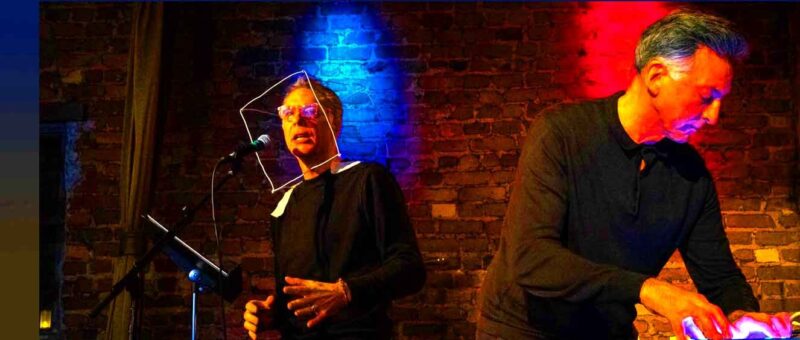
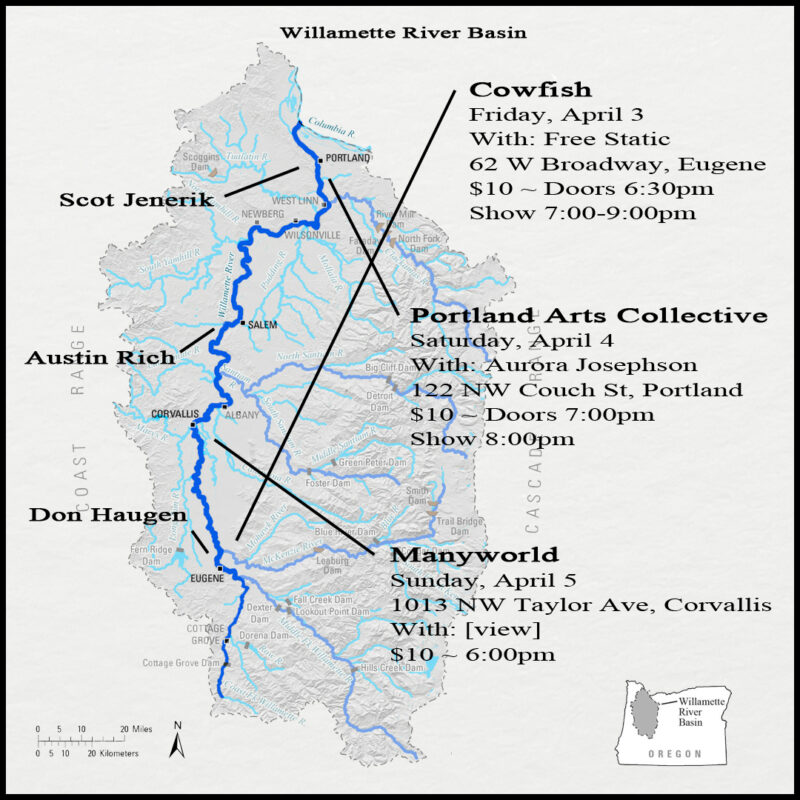
Concert poster for 4-April with Don, Scot, Aurora, and Austin

“Anybody could just start banging rocks together and express themselves,” Don Haugen told us. “Anyone can make noise.” That’s a pretty good entry point for a music form that a lot of people assume isn’t really for them.

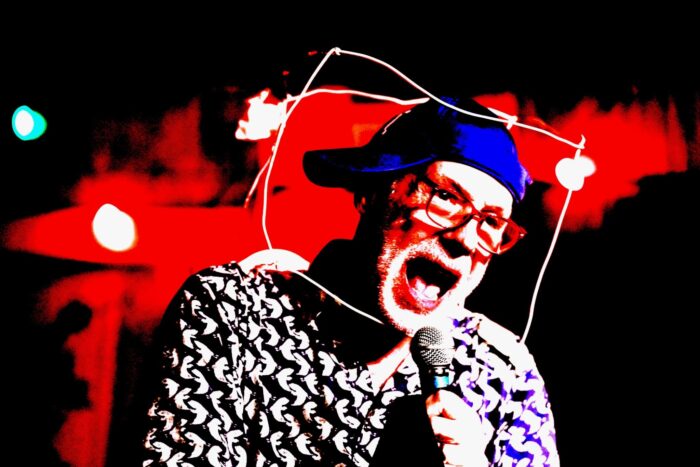
Next week, four artists with a combined century-plus of experience in noise, experimental sound, and sonic art are hitting three Oregon cities for three nights — Eugene on April 3rd, Portland on the 4th, and Corvalis on the 5th. Scot Jenerik, Don Haugen, Austin Rich (Mini Mutations), and Aurora Josephson sat down with us on Missed Connections ahead of the run, and what was supposed to be a quick pre-show conversation turned into one of our favorite long form interviews with more content than we had time to air. What follows is that conversation… the long form version.

For those of you in the PDX metro, their showcase is at Portland Arts Collective, 122 NW Couch Street, in Old Town/Chinatown on April 4, 2026 at 7pm. All ages, safe space, no one turned away for lack of funds. That’s the scene these folks are building.

For everyone else, the show is up on MixCloud


For folks who might be unfamiliar with experimental sound work, how would you describe this tour and what you’re all doing together?

Austin: It’s a bit of a showcase. Three of us are at all three events (myself, Don and Scot), and then we have a different performer joining us at each one. Aurora is joining us in Portland, we have an artist named Curtis joining us in Corvallis, and a duo called FreeStatic in Eugene. So there’s a core team with a rotating guest each night.

How do you all know each other?

Scot: It goes way back through the sound art and noise scene. Don and I have known each other since at least the early ’90s. Austin and I first met at the festival in Eugene that Don put on — at the WOW Hall. And Austin is a phenomenal DJ and interviewer in his own right. He’s been generous enough to care about what I do and have great conversations together about it. Aurora I’m actually meeting for the first time right now.

Aurora: I think we might have met in the Bay Area a long time ago. If you were there anywhere between ’92 and 2018, I was there.

Scot: I was there from ’88 to 2013. Did you ever go to anything with 23five Incorporated?

Aurora: Yeah.

Scot: I founded and ran 23five. That was my organization. Which is maybe where I met Don, too, possibly. But we had you down for stuff as well. It’s a scene — the thing about it is, it’s kind of called the noise scene, but it’s not really noise anymore. It’s like how punk rock started out as this broad platform where the Talking Heads or Blondie could be considered punk. And then once bands like the Germs and Dead Kennedys and mostly Black Flag took on this more hardcore element and toured relentlessly, all of a sudden punk became hardcore, and anyone who wasn’t part of that earlier scene was no longer accepted. The nice thing about the noise scene is even though it’s fragmented to some degree, there’s still a core power electronics scene, but everyone else around it — everyone here does this for the love of it. Nobody’s making money off this. We’re not paying our bills off what we’re doing. So the camaraderie around it is infectious. You meet somebody and it’s like, oh, you’re into this too? You like weird sounds? And you instantly become friends. I tour all over the world doing this stuff and meet amazing people everywhere. Once you meet people like Don and Austin and now Aurora, you’re just part of this family.

Don: I consider Scot and Austin friends and now Aurora. I just met her. But it’s kind of like the nerds’ table at the cafeteria in school. All the misfits stick together. Power in numbers. Maybe small numbers, but still.

Where do you think the noise begins?

Scot: There have been interesting dissertations about this — where things began. You’ve got to go back to Russolo and the Futurists and the Art of Noise. I actually did a speech on this at the Museum of Modern Art (SF MOMA) during a Sound Culture Festival, talking about the different quadrants of where people approach sound in a noise context. From my direction, I came from a fine arts background. I have a master’s degree from the San Francisco Art Institute in visual arts, but I primarily use sound as my medium. Then you had Mills College, which was another huge institution coming from academia — the John Cage tradition of: how can we disrupt normal music in a way that’s going to be really interesting. And then you had Japanese noise, which is basically: what if we plug these two wires together and get an explosion? What could that be? Those were the core rumblings, at least in the mid-’90s, and things have just fragmented out from there.

Austin, you mentioned that things start in one way and evolve over time. Can you talk about how each of you has moved beyond what might strictly be called noise?

Austin: I think each of us have music that probably isn’t strictly noise per se, but it all stems from a similar place of inspiration and ideas. Things evolve. And I think that’s what keeps it interesting.

Scot: Right now I’m playing a Turkish instrument called a saz baglama, playing notes and melodies — but I’m really messing them up. Sometimes they’re accessible because they’re normal notes people would think of as music. And then there are times where it’s like, how are you chopping the sound up so much? Why is this disintegrating? Everything evolves and we’re always pushing forward to the next phase, the next possibility. After a while you get bored doing the same thing. It’s time to move on and look for new realms.

Don, you work quite a bit with home-built electronics and repurposed instruments. What draws you to creating your own tools versus using conventional gear?

Don: It started with necessity — not having the money to buy some of the stuff. But I also like creating new things that don’t exist. I use a lot of test equipment in a way it’s not meant to be used. It has a really robust sound with lots of overtones. A lot of it is 60 years old or older, so it has natural analog glitch that you don’t get anywhere else. Started off as necessity, then I just fell in love with it.

Is there something about analog sound specifically that attracts you over digital?

Don: Oh my god, yeah. If you fire up an HP 200 CD oscillator — a tube oscillator with a built-in tube amplifier — it does a sine wave, nothing else. It’s got a volume knob and a frequency knob. The knob itself is about eight inches around. You run that through a subwoofer and there’s nothing like it. It’s so harmonically rich. It’s warm and it’s so imperfect that it’s beautiful. It will never be the same twice. If you run a digital signal, it’s so pristine and clean. It makes me sick.

The magic is when you get two of those machines together and they’re close enough in frequency that they create their own beat frequencies, and they drift — it just takes you someplace else. I don’t know how to describe it. It’s like listening to the ocean versus listening to a noise machine next to your bed. There’s no real comparison.

Your work ranges from very dense sounds to very quiet, whispering tones. How do you decide what sonic territory to move into for a given piece?

Don: For me it’s pretty emotive. You’re telling a story. You have to have contrast, some textures. Sometimes there’s a buildup or a fall down, and sometimes both of those are happening at the same time. I compose the pieces in my mind, how I’m going to approach it. I’ll write them out often. There’s actually a start and a finish. It is composed.

Aurora, you have operatic training — a BA and an MFA from Mills College. How does that classical foundation connect to the experimental work you do now?

Aurora: You could look at it this way. For me, I started opera as a base, a platform through which I could get to other spheres — mainly improvisation. I don’t really like a lot of the classical opera I studied to begin with. The German art songs I could do without. But I really like modern opera. I use the training as a platform. It seeps in in other places, too. I used operatic styles in my interpretation of John Cage when I performed with the Merce Cunningham Dance Company, for instance. The styles inform the noise work. But opera is the platform by which you get there.

You also do a lot of visual art. What does it look like balancing that with sonic art?

Aurora: Well, right now I have this amazing mountain of smut that I was gifted. I am called the Kink Disposal Unit and it’s my very first solo act. I’ve never performed solo before. I’m sitting on over 20 boxes of all kinds of kink material — periodicals, suggestive imagery, BDSM content. And I’m digesting it. I’m taking the imagery, I’m reading it, and I’m also using my Akai two-track to make extended techniques and record them as a backing track while I read all of this pretty incredible material. That’s what’s going on there.

Scot, tell us about how you decided to press a concrete vinyl.

Scot: It started when I was on tour in 1996 and I was at somebody’s house in Seattle. They had metal pressing plates for pressing vinyl — first time I’d ever seen them. I’d already been doing a ton of work with cement, so I had the thought: it’d be really interesting to actually make an album out of cement.

The initial version was Mozart’s Requiem, and it ended up sounding like a transmission from Marconi in 1904 — this ethereal sound coming out. And it was backwards, so it was the black mass. For about 20 years I tried to find the right piece of audio to embed in the concrete. At one point I jackhammered the cement pad at a warehouse in San Francisco and thought that would be perfect. But it was too obvious. Everything I came up with seemed like I was just placing sound there for no specific reason.

Then I saw the movie Let the Right One In — the Scandinavian vampire film — and it blew me away. I decided to write an alternate soundtrack for the vampire Eli. This short piece came out and I was like, this is perfect. When you cast cement against a surface, it picks up that surface, so it ends up being what you play. It’s very gritty, a lot of surface noise. It feels like you’re underground when you’re listening to it. One of those projects that just took a long time to come together, but eventually did.

Definitely not something you want to break out your finest stylus for.

Scot: No. I have a secondary turntable for that album. But unlike the punk rock albums that were coated in sandpaper, it’s not meant to destroy your stylus. It’s more about integration. I’m very much a direct, elemental-contact kind of person. I like embedding sound in physical material. One of the other things I started out doing was building instruments that would blast fireballs. I’d be doing percussion instruments engulfed in fire, or drumming on flaming sheets of steel with my bare fists. The progression has been very elemental. The initial sound source has to be something physical. I’m not against digital — all of my effects are digital. It’s just that the initial source has to be physical. I think that’s what it is more than anything else.

Austin, you’ve worked quite a bit with zines and physical media. Tell us about how that collage sensibility turned into music.

Austin: I started making zines in high school. I saw one, I read it, and the next day I knew I was going to make one. It was a pretty instantaneous conversion. I got really into collage in zines because it was this wrestling with physical media — you’d take magazines, find things you could cut up and turn into something else, and that becomes pages in this larger piece.

After college it occurred to me: why am I not applying this collage to music and radio? So I’m kind of the outlier in this group in that I’m cutting up the media and music and movies and TV around me and trying to make new things out of it. The computer is one of my bandmates, in a way. I perform the bass parts and analog synthesizers, but the computer helps with samples and beats. That was really my focus — what if I took this collage idea that ignited my mind as a young person and tried to do an audio version of it?

The music we played on the show has these big narrative arcs — almost operatic, storyful. How do you pull together something that starts as collage into a cohesive piece?

Austin: It takes a long time, I’ll be honest. I got a writing minor in college as part of wanting to take apart how stories work so I could make my own. And I realized that when you’re doing a collage, you’re doing that in a very primitive way. You’re like, I like this piece over here, but it has to go first because this other thing later references it. As you assemble it, a story starts to develop even if you’re trying to avoid one. We have this incredible ability to find connections between things even when there is no connection whatsoever. You string together three samples from any three places, and sooner or later you start to hear how they connect when you hear them enough times in a row.

Sometimes you’ve got to listen to it 500 times before you hear where something needs to go. So there’s a lot of listening, comparing, going back and forth. And sometimes you’re like, I’m going to play the bass for a little while because I’m stuck and I need inspiration.

You’re all in the same universe, but the work is wildly different. What does it sound like when you’re together, performing back to back?

Austin: A few of us have played together in different combinations, but never in this particular arrangement. There are going to be a lot of question marks as we run through this and see how it works out.

Scot: When you group certain people together for a tour or for shows, you’re already curating what it’s going to be. We all approach things from a slightly different direction, but we exist close enough in a realm that it creates a cohesive evening. We’re different enough that it makes it not boring — you’re not having the same thing four times. But it’s four acts doing things that are close enough in relationship to create a homogeneous kind of night. I was just in Japan last September touring with Joseph Hammer and Thomas Dimuzio, and there were nights where the combination of extreme power electronics to floaty sounds to Buchla-laden stuff created a really broad range. And it was brilliant every single time.

For anyone listening who may not be experienced with experimental music, what would you want them to know for their first engagement with this sound?

Scot: One of the best things anyone ever said to me was after a show in Chico. This guy came up and said, “It’s not that I didn’t know this was possible — I didn’t know this existed.” And he said it was a phenomenal; a door-opening for him to understanding a different way of listening. 

Aurora: Just keep an open mind. You don’t know what’s possible. There’s a lot that’s possible that you may not know you liked. Come with an open mind and an open heart.

Austin: I had a show not too long ago at an art gallery where afterwards somebody said, “I didn’t think you were going to get that political or that I would want to dance that much.” That was never really my goal, but every once in a while I’ll throw a beat in, and politics as well.

Don: I think it’s surprisingly approachable music, to be honest. There’s so many different kinds of experimental music being made — there’s something for everybody. People may already be listening to experimental music and not even know it. Industrial music influenced Madonna. It really is everywhere. It’s got a longer history than rock music. For me, this kind of stuff is taking academic thoughts about what avant-garde music is and making it street-level, making it accessible to anybody and everybody. As in punk, I think experimental music is truly the most punk of all because anybody can do it. Anybody could start banging rocks together and express themselves. Anyone can make noise.

Scot: The best thing about noise is anybody can do it. And the worst thing about noise is anybody can do it. But fortunately, within this particular show, you have seasoned veterans that have dedicated 30-plus years of their lives to this.

Aurora: And one beginner. But come on. I’ll wow you.

Austin: They used to make that same comment about improv comedy, and eventually improv comedy became the primary form of comedy in a lot of circles. So just wait. Experimental is taking over.


Scot Jenerik is a composer and conceptual artist based in Portland, OR. Find his work at scotjenerik.bandcamp.com

Don Haugen is a sound artist and curator based in Eugene, OR, and founder of the Eugene Noise Fest — find him at donhaugen.bandcamp.com

Austin Rich performs as Mini Mutations out of Salem, OR — find him at austinrich.org

Aurora Josephson is a vocalist, printmaker, and photodocumentarist based in Portland, OR — find her at aurorajosephson.com

The Portland Arts Collective is at 122 NW Couch Street in Old Town/Chinatown —portlandartscollective.org.

5 Songs to Celebrate Asian Lunar New Year – 2026 The Year of the Fire Horse

Asian Lunar New Year, also known as the Spring Festival, is based on the Asian lunar calendar, which differs from the Gregorian calendar. Asian Lunar New Year this year falls on February 17, 2026. Asian Lunar New Year is celebrated by billions of people around the world and immensely in Asia. Countries such as China, Korea, Vietnam, Thailand and across South East Asia gather with families, friends and honor ancestors. Festivities include eating foods symbolizing wealth, health, prosperity, and abundance. Dumplings are symbolized as purses filled with sweet and savory fillings. Long noodles symbolize long life. Celebrants decorating houses in red to bring good fortune and lighting fireworks to ward off evil demons and spirits. 

The Fire Horse Year aligns with a celestial event paralleling a new moon and a solar eclipse. This cosmic event sends the Fire Horse galloping in and bringing an abundance of Yang. The Yin and Yang symbol represents states of the universe in mutual balance which applies to nature, planets, and living beings. Yang energy symbolizes fire bringing intensity, transformation, expansion, freedom, action, extremes, and rejuvenescence. In Cantonese I bid you, “Gung hay fat choy” (I hope you prosper). Please enjoy these 5 Asian songs to celebrate the New Year of the Fire Horse. 

Ervinna

Theodora Monica Ervin (04 May 1956) aka Ervinna is a popular 1980s Indonesian singer and actor who was born in the year of the Fire Monkey. She worked with song writer and composer, A. Riyanto who is a recognized musician and songwriter in the Indonesian Pop scene. She is multi-lingual and sings in Mandarin, Cantonese and Malay. Ervinna is admired in Indonesia in addition to Singapore, Hong Kong, and Taiwan. 

Ervinna started her singing career as a teenager in the 1970s, utilizing genres incorporating pop, keroncong, reggae, new wave, gospel, western pop, disco, cantopop and mandopop. She has a prolific discography releasing over 200 albums and has covered many Western popular songs (wiki). The song “Lari Pagi” translates to Morning Run which is the title track of her cassette release from 1984. 

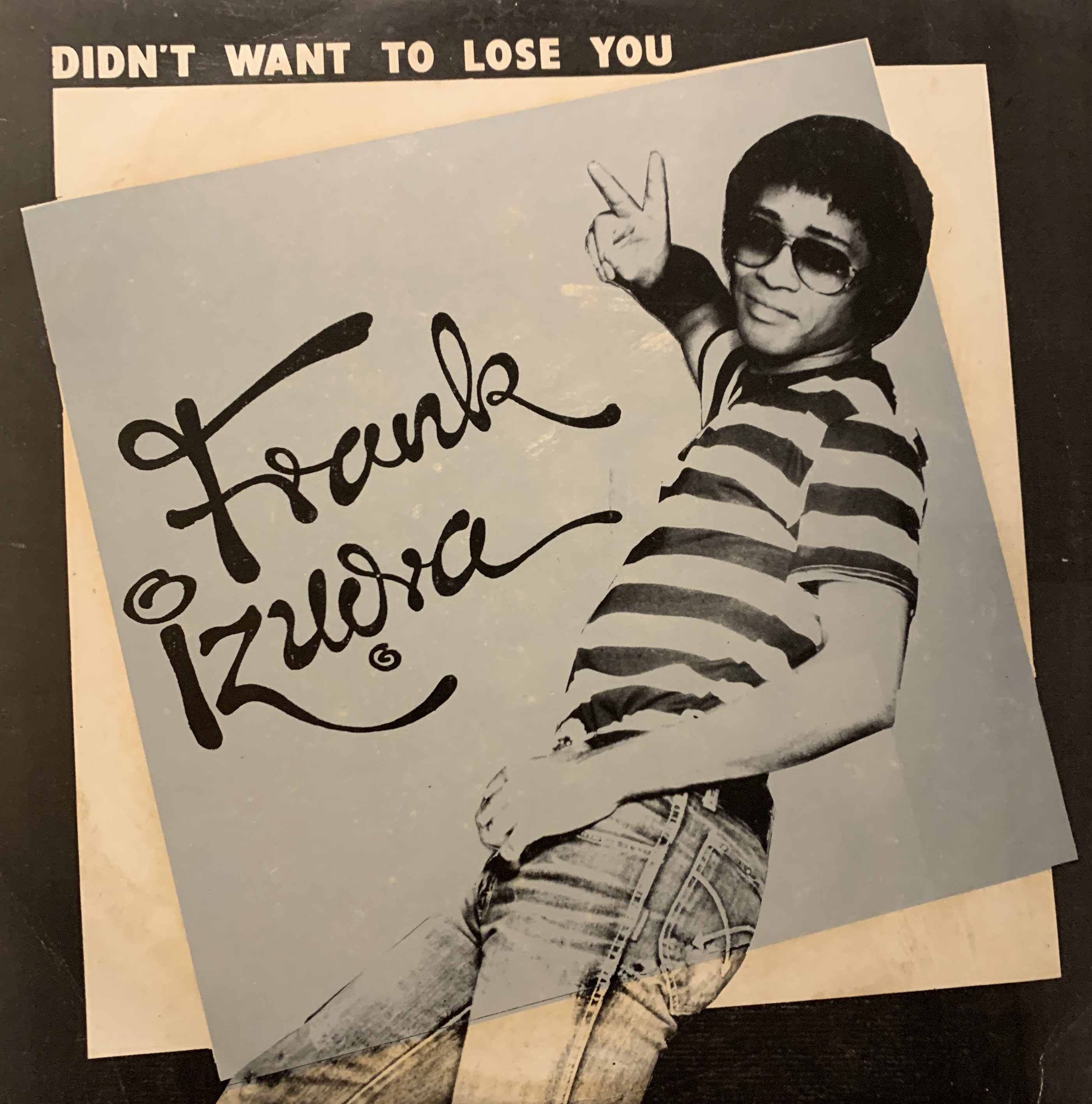
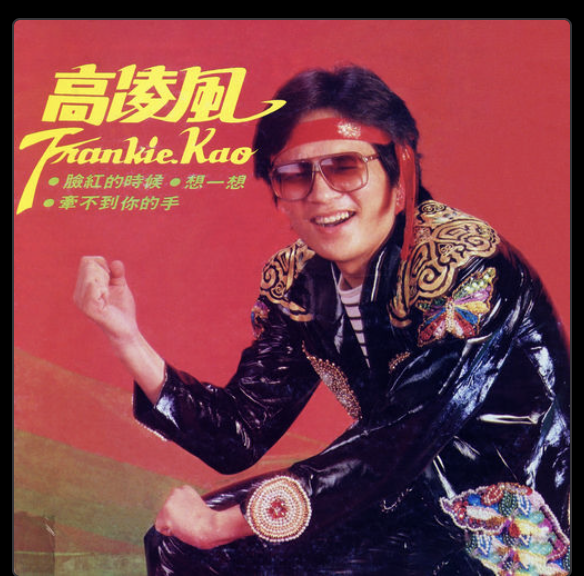
高凌風/Kao Ling-feng/Frankie Kao

Ko Yuan-cheng (28 February 1950 – 17 February 2014) aka by stage names 高凌風, Kao Ling-feng and Frankie Kao was a multitalented Taiwanese artist who spoke Mandarin and was born in the yang year of the Metal Tiger. Kao’s parents were Vietnamese of Chinese descent (wiki). Kao was an extrovert, charismatic, expansive singer, actor and personality. Ni Min-jan, a comedian and friend, gave Kao the nickname “The Frog Prince” judging his appearance with a short neck and small stature while dancing with beautiful women in music videos and stage shows. Kao was widely known for his enigmatic Western disco, rock and pop covers from the 70s to 2000s, plus singing songs written by the song writer Qiong Yao. 

Thuý Lan

Thuý Lan is a singer whom I am assuming is from the 1980s New Wave era whose music was released as cassette #23 on Da Lan tapes. Da Lan released music by Vietnamese singers, music soundtracks and curated Vietnamese music compilations on cassettes, vinyl, CD, VCD, VHS tapes and DVD. Da Lan catered to the Vietnamese community especially in the United States post Vietnam War era. The company released cassettes that were numbered #1, #2, #3 and upwards with very little information about the musical artist (chinhnghiavietnamconghoa.com). Da Lan cassettes and New Wave music was embraced by Vietnamese populations in Southern California, Asia and worldwide. Check out the documentary New Wave, by Elizabeth Ai signifying the 1980s New Wave Vietnamese scene in the US. 

Moon Joo-ran


Moon Pil-yeon aka Moon Joo-ran was born on Sept 30, 1949 in the year of the Earth Ox. Moon began her career at 16 years old singing a release song, Christine Keeler that garnered no attention. In 1966 she recorded “Dongsuk’s Song” and gained notoriety singing in a deep bass Korean voice complementing her beauty and femininity. She became known as the female bass baritone singer, ‘the female singer with the lowest voice in the country’ and ‘a child with an adult voice.’ Moon appeared on the 2012 I’m a Trot Singer Lunar New Year Special singing “It’s Me” by Namjin on MBC television with 7 other Korean singers performing in a contest (en.namu.wiki/w/문주란).

Nok Lae


Nok Lae started as a string band created by Mr. Somkiat Suyaraj who was a previous teacher at Phutthisophon School in Phra Sing Subdistrict, Mueang Chiang Mai District, in Chiang Mai province in Thailand. Nok Lae were appointed children in the band after dressing them in customary hill side garments. In 1983 Suyaraj provided stringed instruments to the band to play and they were eventually discovered by a talent scout. Nok Lae’s first performance was a broadcast on a television show, “Lok Dontri”’ (World of Music). They played 3 songs as the opening band for the Pink Panther band at Chiang Mai University. 

Nok Lae found stardom in 1985 after the broadcast where university professor, Professor Somkiat was contacted to invite the band to perform at World of Music stage on Channel 5, Thailand’s second TV channel. Rewat Phutthininth, who was a founding member of the GMM Grammy, a company focused on marketing Thai pop. Nok Lae released 5 albums, Num Doi Tao (1985), Uiy (1986), Sib Lo Ma Laew (1987), Chang (1988), and Thing Nong Noi (1989). Tinkorn Sriwichai sung their hit, “Num Doi Tao”, he brought joy into songs, “Tuttuu” in “Ya Lueam Nong Sao,” supporting his band members. The movie My Girlfriend (2003) was set in 1985 and all of the directors used Nok Lae’s “Concert for the Poor” as the theme song. 

There have been 15 generations of Nok Lae band members who would leave and rejoin the band. Members of the band during the Grammy recording era (1985-1989) as listed.

Teacher Somkiat Suyaraj  : Band conductor, guitarist.

Nopadol Suyarach (Jack): Guitar (1987-1989)

Suwit Chaiyachuey (One 1): Drums, Lead vocals (1985-1986)

Prachya Panjapanya (Young 1): Keyboard, Lead Vocals (Passed away January 4, 2026)

Solos Sukcharoen  : Guitar (1985-1986)

Tippaporn Nampuan (Nok): Bass

Thinnakorn Sriwichai (Yan): Bongos, Trumpet, Lead Vocals

Udon Tasurin (Dr.): Drums, Trombone, Tomba drums, Timbales.

Sirilak Chumpamaniwor (Noi): Lead vocals, tom-tom drums, tenor saxophone.

Daraporn Sriwichai (One 2): Lead vocals, rhythm, trumpet

Praewprao Chaitip (Tukata): Announcer, Rhythm, Alto Saxophone (1985-1988)

Apichat Khan-khang (A): Lead vocals, percussion (1986-1988)

Saranya Uppaphan (Tudtu): Lead vocalist (1986-1989)

Supannika Methaprinya (Kookkai): Lead vocalist (1987-1989)

(wiki Nok Lae)


Written by Karen Lee (@centerforcassettestudies)


Putting the “Ban” in Bandcamp: The Implications of the AI-Ban

Rising R&B artist Sienna Rose has racked up over 3 million monthly listeners on Spotify in less than 6 months. Headlining countless viral playlists, Rose is also suspiciously prolific, having released four full length albums since October of 2025. Her latest record, Date Night, features risqué track titles, like “Deep Intensive Kissing” and “Loud Moaning.” There seems to be a pattern to Rose’s cover art as well: 50s-style dimly lit portraits modeled after the likes of Sarah Vaughan and Billie Holiday. The singer caresses a retro microphone or gazes out the window, flashing a self-conscious smirk at the camera. The music itself is formulaic modern R&B; Rose’s vocal performance is reminiscent both of early-aughts artists like Alicia Keys and Norah Jones, and neo-soul singers like Cleo Sol and Jorja Smith. Keen readers might get a sense where we’re headed. All signs point to the likelihood that Sienna Rose is, gasp, not a humble starlet who won the streaming lottery at a time when prospects for musical careers are exceedingly grim, but in fact an imposter: an AI-generated artist whose digital footprint is less than one year old. 

On January 13, Bandcamp made headlines by introducing an unprecedented blanket ban on music made using generative AI (GenAI), under the banner: Keeping Bandcamp Human. Their policy reads:

  • Music and audio that is generated wholly or in substantial part by AI is not permitted on Bandcamp. 
  • Any use of AI tools to impersonate other artists or styles is strictly prohibited in accordance with our existing policies prohibiting impersonation and intellectual property infringement.

The language around the enforcement of these guidelines is murky at best. Bandcamp mentions “reporting tools” that listeners will be encouraged to use to flag suspected AI-music. This begs the question: who will be reviewing these claims? Much AI-detecting (or “spam-filtering”) software is itself reliant on AI tools. The potential irony is glaring.

Bandcamp’s policy suggests that mere suspicion of GenAI use may be enough of a decisive factor for the platform to remove a song, an album, or even an artist’s entire catalog from the site. The question then becomes, how do we train ourselves as listeners to identify AI-generated music? 

Sienna Rose is not the only AI-artist to gain success on streaming platforms. You might remember The Velvet Sundown, a supposed psychedelic band whose monthly listeners numbered over a million before the group was exposed as “synthetic.” There was “Walk My Walk,” a single from Road Boyyz, an AI country group, which reached No. 1 on Billboard’s Country Digital Song Sales chart, having won the hearts (or maybe just ears) of millions with lyrics like, “You can kick rocks if you don’t like how I talk.” There’s the case of Xania Monet, an uncanny hybrid of Christina Aguilera and Beyonce, who signed a multimillion dollar record deal with Hallwood Media after a heated bidding war. 31-year-old poet Telisha Nikki Jones designed Monet with the help of Suno, one of the leading GenAI-based music production platforms. Monet’s artificiality was not a problem for the labels vying to represent her; in fact, an AI-generated artist might be the ideal act for predatory music companies: a musician unburdened by the baggage of human rights and fair working standards. That is, of course, if the contract is under Monet’s name rather than the name of her “creator,” Jones, who appears to be a real human being.

AI-generated image of AI-generated band Velvet Sundown playing AI-generated music. Courtesy of Velvet Sundown.

The hope when one creates an AI-artist, from a business perspective, is that the artist might be added to an editorial playlist on Spotify or Apple Music, thereby generating revenue for the human actors behind the slop. Bandcamp’s business model and ethos differ greatly from those of its competitors, in that it’s always boasted an “artist-first” model, where artists receive relatively high payouts and the ability to directly engage with fans. Bandcamp does offer streaming, but you can only stream an album so many times before being prompted to “open thy heart/wallet” and purchase the music. The platform recently introduced a playlist function, but fans can only add purchased music to playlists, and unlike Spotify and Apple Music, there are no Bandcamp editorial playlists for various genres and moods. 

Considering Bandcamp’s ostensibly values-based business model, one wonders how prevalent GenAI really is on the service in comparison with its streaming competitors. Undoubtedly there is music on the platform that is entirely or substantially generated by AI, given the ubiquity of the technology, but there is far less of a chance for the success of an AI musician on an “artist-first” platform like Bandcamp as opposed to Spotify or Apple Music, where an AI-artist can reach relative fame, or at least virality overnight by being added to editorial playlists and algorithmically-curated radio stations. More likely, Bandcamp’s issue is spam: mass uploads, duplicates, SEO hacks, etc. This news of the ban having just become public, it remains unclear what tactics the service will take to identify these issues and rectify them. 

There is an obvious PR aspect to this move from Bandcamp, which has been subject to criticism since the company was sold to Songtradr, a B2B music licensing service, by its short-term parent company, Epic Games, back in 2023. Soon after the acquisition, Songtradr attracted further ire by announcing that 50% of Bandcamp employees had “accepted offers to join” the company, a roundabout way of admitting to sizable layoffs.

The previous acquisition of Bandcamp by Epic Games in 2022 was a worrisome sign for users of the platform, who wondered why the software developer behind Fortnite would be interested in buying a hitherto independent music retailer like Bandcamp. For many, the Songtradr deal only amplified alarm bells that had been sounding since the Epic Games takeover.

It remains to be seen whether the negative reactions to Bandcamp’s recent ownership changes and business practices will be tempered by the platform’s strong stance on AI. The policy has already attracted a number of supporters and detractors, numbering among them musicians who use AI technologies and fear the blanket ban will cause their music to be removed from the platform. 

Holly Herndon, an experimental artist and composer (with a Ph.D from Stanford University’s Center for Computer Research in Music and Acoustics), expressed skepticism over the potential impact of the ban. Herndon’s work has long incorporated AI-tools and Web 3.0 technologies such as blockchain. Regarding the Bandcamp ban, she posted to X: “I understand why Bandcamp is taking this measure but it’s a tourniquet,” going on to say, “We live with infinite media now… I encourage platforms to be more curated, but enforcing a hard human / AI binary is not the right way to address this long term.” 

Lee Gamble, an electronic musician signed to Kode9’s illustrious Hyperdub label, used a neural network to create the choir of artificial voices that haunt his 2023 project, Models. Gamble isn’t trying to fool anyone; the artificially generated voices on Models are used in a similar way that samples have historically been manipulated in electronic music to create dense, borderline-hallucinatory sound environments. In an interview with Passion of the Weiss, Gamble spoke candidly about his relationship to AI, stating that, “I’m aware that it’s problematic…but it’s also such a tantalizing technology for an artist to not use. I’m still in a quandary with it.” For Gamble, the artificial voices are interesting precisely because they are inhuman and strange: 

“It’s about the idea that these aren’t real people, but it’s not suggesting the replacement of people. It’s about, “How much mood can I get out of this? How human can I make the technology?” How human does a singing voice feel when it’s disembodied? How emotional can a digital simulation feel? This is without ignoring what they are: simulations of people.”

Both Herndon and Gamble use Bandcamp to share their music, and likely make more money from the platform than all other streaming services combined. But, as artists on reputable labels who have spoken extensively about their creative and nuanced relationships with AI-tools, they are unlikely to be targeted by Bandcamp’s ban. 

It’s worth noting that Spotify removed roughly 75 million songs in a major crackdown on what it euphemistically called “spam” last September. Using a music spam filter, likely powered by AI, Spotify claimed to identify uploaders of spam, tag them, and prevent the tracks from being prioritized by its algorithm. The language was especially strong regarding “voice clones” which it classifies as impersonations. However, artists that pass the spam filter are not required to label their music as entirely or partially AI-generated. All of the aforementioned AI-artists that gained fame on the platform are still hosted there, as well as on Apple Music, which has all but embraced AI, albeit primarily as a personalized playlist-creation tool.

One of the more startling aspects of the proliferation and rapid advancement in quality of AI-generated music (not to mention images) is the way it makes us, as listeners, feel. For many a principled music lover, i.e. Bandcamp’s target demographic, listening to an AI-generated voice masquerading as a human one is unsettling. More disturbing is the possibility that this artificial music could produce an emotional response in the listener. At the same time it’s true that many listeners have no problem with AI-generated music, many even finding it novel and exciting, a reminder that AI-skepticism is still relatively fringe despite many of us living in left-leaning, conscientious bubbles that suggest otherwise. 

A recent study on the “perceived humanness” of AI music found that, when presented with pairs of songs and asked which of them had been generated by AI, specifically via Suno, participants chose correctly only 53% of the time. The accuracy rose to 66% when the pairs of human vs. AI songs were stylistically similar. But because AI-generation models update frequently, by the time the study was released, there was already a more advanced Suno model available. Recall now Bandcamp’s proposal to review all music flagged as potentially AI-generated by its users. With such a high margin of error, there are bound to be false reports, as well as instances of AI-generated music that go undetected. It’s not just the uncanny valley that troubles critics of AI; many point to its vast, energy-guzzling infrastructure, with some large data centers consuming over a million gallons of water daily. Most troubling for artists is the idea of AI-generated acts superseding flesh and blood musicians in the industry rat race, a novel iteration of the age-old fear that humans will lose their jobs to automatons. It will be instructive to see the material consequences of this ban in the coming months, and whether other streaming platforms follow suit in issuing harsher AI policies.

Temi Kogbe Interview: Odion Livingstone

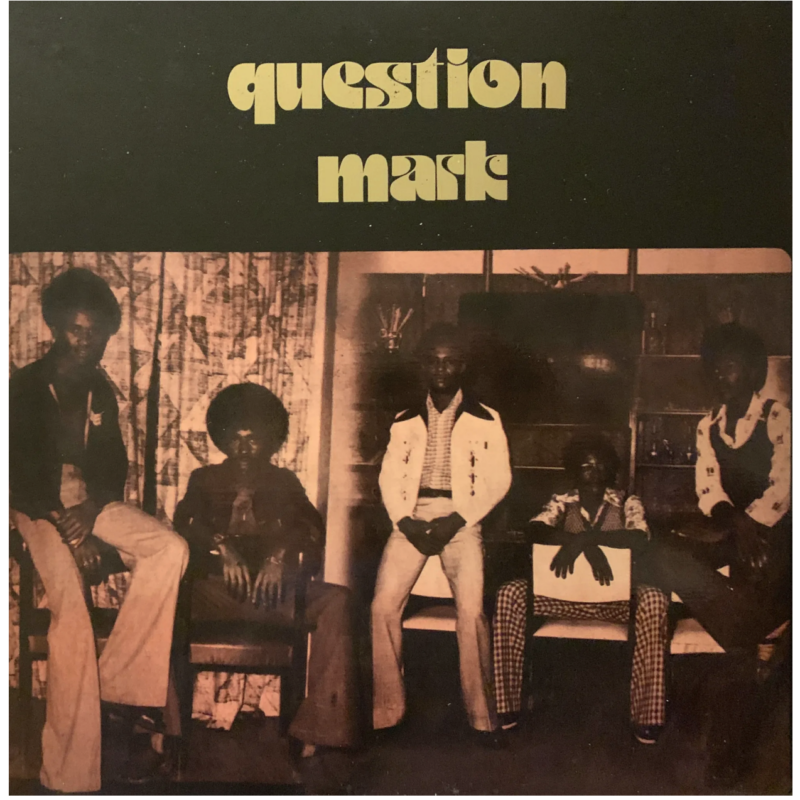
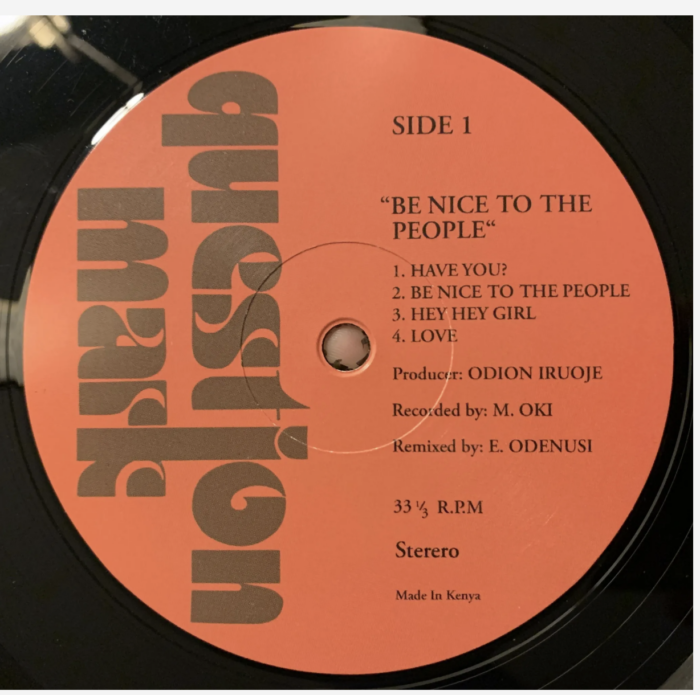
On Dec, 14 2019, Jim and I had the privilege of interviewing Temi Kogbe on Freeform Portland on my past show, Weekend Family Hour (WFMH). Jim and I have merged into our show, Center for Cassette Studies, Saturday 10 am to 12 pm weekly. Kogbe is a cofounder of Odion Livingstone Records, curator, African music archivist and collector. He operates Odion Livingstone with former heavyweight EMI-Nigeria producer and musician, Odion Iruoje. Odion Livingstone Records was founded in 2017 and is the only vinyl reissue label operating in Nigeria today. Their recordings are deeply based in African groove heavy tempos, soulful boogie, disco, synth, funk and electro psychedelic tones.

We are sincerely appreciative to Temi for the opportunity in conversing with us from the Ivory Coast. The following is a partial transcription of the interview. The full show is archived at https://www.mixcloud.com/karen-lee3/interview-with-temi-kogbe-co-founder-of-odion-livingstone-records/

K&J– Can you please tell me how you got started as a deejay and what stood out for you with Odion Iruoje productions and being a co-owner of the Odion Livingstone label?

TK– First of all, I’m not a deejay but that’s a secret between us. I’ve had opportunities to play out but I don’t really care about deejaying. I’m basically a collector and someone who is interested in the history of the music, culture plus the context the music was created. So that’s my primary interest. I got into the music late. I used to read a music blog called Voodoo Funk by Frank Gossner. He wrote about amazing trips through Africa, about African music which got me interested. I thought, how can I live here and not even try to find records? I spoke to Frank and he told me to not even try to find the music because there was nothing left, not to bother. But I stumbled on some people, found some stuff, and then I found some other stuff. Nigeria is a big country where there is a lot of music. There is music that is undiscovered, there is music that the Western guys are not looking for because it’s not their taste. But to me it’s still relevant. So I became a digger; I would go on the radio, find heirlooms, and stumble on gems. 

K&J-Whenever we try to find African records they are sometimes not in good shape because the African climate is not record friendly.

TK– The environment is not conducive to records. It’s a whole bunch of factors, and if you look at records, they are just a medium to listen to music. People live poor lives in general. If you look at life constraints and having records, there are no turntables to play records anymore. They probably thought this record doesn’t have any value anymore and CDs had taken over and people stopped buying records. You could find records in chicken coops, exposed to elements like water. However some records survived, and you can maybe meet the artists who have five copies at their mother’s house, or find a distributor who still has stock because a lot of records were flops at the time. First off, they didn’t make many of them, and secondly, few survived. So they are rare. That’s why the prices are high. You can compare African records to jazz collector records where the market is very high. I think they’re well priced, to be honest.

K&J-The Odion reissues are the best price. When Odion Livingstone started reissuing records we flipped out! We’re your biggest fans and we appreciate your label so much.

TK– Thank you. The label is 100% African but the records are made in Germany. We wanted them to sound like Soundway records which are high quality. We have to use mixers and producers that everybody uses. We found our own guy in Australia who’s a genius, I’ll give you his name before the show is up. We have to keep the original quality of the record we reissue.

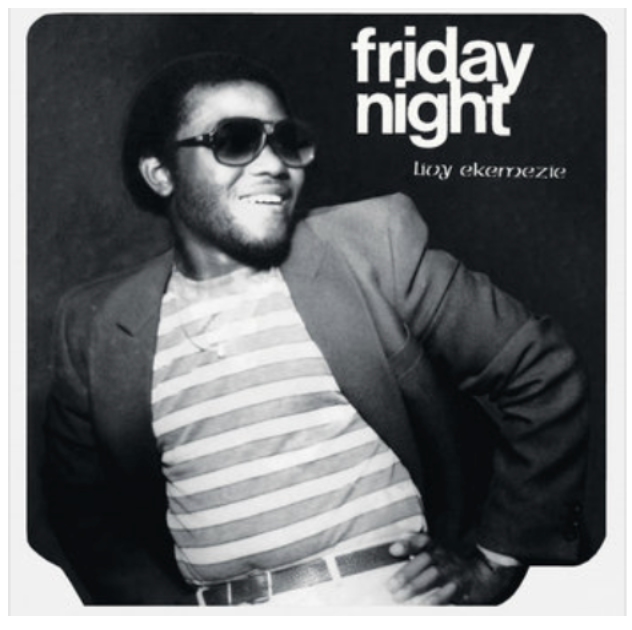
K&J– We love the quality of Odion Livingstone records. Exampling Livy Ekemezie, the first reissue you put out. Keeping the original artwork from the first press, keeping the blue vinyl and creating the labels looking similar to original releases. 

TK– We put out Livy Ekemezie with Strut, Quinton Scott. So basically, I asked him if we could put it out on blue vinyl like the original record. He also wanted to keep it close to the original which was pressed at William Onyeabor’s record plant, whose entire catalogue had been reissued by Luaka Bop. So originally Livy went up there and got his record pressed, and William Onyeabor asked him if he wanted it on blue vinyl for the same cost. Livy told him yes. A fun fact: Livy gave me the studio photo he used on the cover so we didn’t have to scan the cover of the original album. We had the original studio photo that he took for the reissue of the record.

K&J– Did that record do well when it came out, was it a private press originally?

TK– Everything was pretty much private press, apart from EMI stuff. Mostly, artists found someone to sponsor them. The Livy Ekemezie was a private press, and it did not do well so he went back to school after that. His parents gave him permission to be a musician for a few months and get it out of his system. He made an amazing record and our mixer who did the pre-production was Frank at The Carvery, he did a fantastic job on that. Dan Elson is the genius Australian who’s produced our fourth release to the seventh. Frank produced the first three. 

Going back to Livy, he took the masters of Friday Night to EMI and wanted to meet with Odion. This was 1979-1980. And Odion wouldn’t see him because Odion was the biggest producer at the time. Someone else looked at the record and told him EMI was not interested, so Livy put it out himself. It was arranged by (Livy) and Julius Elong who is Cameroonian, a keyboard player. The album has a different sound when it was produced. It’s super dense, hyper funky, it’s focused funk.

K&J– We love that record and play it out all the time.

TK– It’s actually our biggest seller and shows another side of Nigeria that people don’t expect to hear from Africa. It sounds like New York.

K&J– How hard was it to track down Odion Irojue and involve him in the label, did you have records by him you wanted to release?

TK– To be honest, I just wanted to meet the guy. You can compare him to Phil Spector. Odion is an enigmatic genius. I wasn’t sure how to go about licensing, so I found I had to track down the artists first. Odion Irojue’s name opens doors, and he agreed to reissue records with me. I approached artists on a record-by-record basis. Some artists are hard to find, some artists disappeared, some had stage names, some are not on Facebook. So you find a guy, then they want too much money, or you can’t find them. So some records are not released because of licensing. 

K&J– It’s great you’re being ethically correct and trying to find artists to ask for consent. 

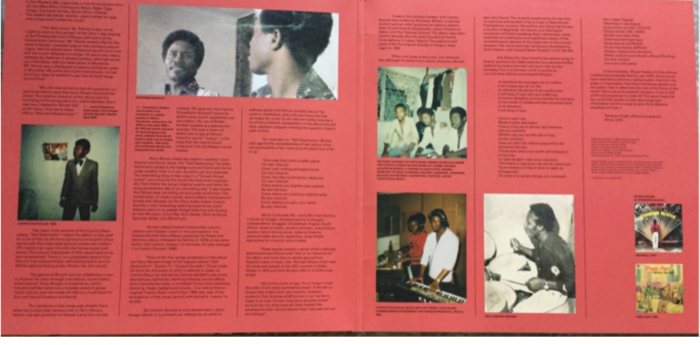
Photo courtesy of K7 Music

TK– It’s the minimum we have to do. Livy didn’t believe it until he got the money for the reissue. He couldn’t understand how we knew about his record. He was actually scared and thought we were kidnappers. He couldn’t believe we wanted licensing to reissue his record. He was shocked! It was a short chapter in his life, he did the record at 18 or 19 years old and that was it, he wasn’t a musician but really into music. It is very Nigerian to reinvent yourself and when he made the record he moved on. Livy did some studies in Marketing, he worked for an oil company; when he got the check from the record he said, “Look, I never expected this”. He was really happy. When Strut got the record, it sold out like hotcakes and they asked us if he can talk or do some appearances. I talked to him about it and he laughed, it was too far away from his experience for him. He is older and in his 60s, he has eyesight problems. It’s the strangest story for him he can imagine. I think the internet has a big part in this. 

K&J– It’s a great story for him, it’s nice how artists can be remembered and highlighted for their musical accomplishments when they were younger. There are musicians that are having a resurgence such as Ata Kak who’s touring with Awesome Tapes from Africa. Like Livy, he is able now to make a living off his music because of reissue labels.  

K&J– What’s the story with the two Grotto records?

TK– The two Grotto records were EMI releases at the time. EMI had just come from the Ofege madness which was a very successful release. So Ofege came out as a monumental hit and they couldn’t press the records fast enough. So Odion tried more boy bands, he was experimenting with a lot of boy bands.

K&J– Was C.S Crew one of those? 

TK– No, they were older. Odion used to go to schools and listen to talent shows. So Grotto was one of those bands. I met the lead guitarist and worked a deal with him.

K&J– I love the female vocalists on the first record…

TK– I met them after the record and they told me about their experiences, Ukay and Bola. The first record is very sought after in the rock collector world. The second record is more straight ahead funky stuff. I am fortunate enough to be able to sell some Grotto originals, and I have sold the first Grotto record to rock guys who really like it. But the second Grotto record was a more successful release because it’s easy to dance to. The first Grotto record is like a unicorn, the rock guys really like it, similar to Hendrix, maybe Sly Stone. It sounded interesting. They went to Saint Gregs College and were members of a school band. Similar to the whole Ofege thing, Grotto did not do as well as Ofege but they were very interesting. 

K&J– Did those bands play live at hotels in the 70s?

TK– They played at hotels, universities, stadiums, there were a lot of live shows in the 70s and early 80s.

K&J– Manford Best from the Wings wrote in his book there were many Nigerian bands playing at different hotels. He explained how rival bands, such as Wings and Super Wings, played at different hotels on the same day. It’s a very interesting book about the Nigerian music scene in the 70s and 80s. Did you read it?

TK– Yeah, I read that book. One of my diggers introduced me to Manford Best. I spoke to him and told him “I love your stuff”. I told my guy to buy his book and send it to me. We need more of those books. I wish Jake Sollo had a book, or Nkono Teles. There are guys who had incredible careers in Nigeria who played amazing music and no one knows anything about them. This music was on the radio, this music was the soundtrack to Africa at the time. Some of the songs were really big hits, the songs on the radio people would sing along with. But nobody knows anything about them. 

K&J– Well you’re such a good writer, Temi, so maybe you can start another career documenting biographies and start Odion Livingstone books…

TK– Nah, Uchenna (Ikonne) does a good job.

K&J– Your liner notes for the N’Draman Blintch Cosmic Sounds reissue are great.

TK– One of my good friends was involved with that reissue, and I always wanted to put that record out but I couldn’t find N’Draman Blintch. He is one of the biggest enigmas in the Afro Music collecting world. Blintch is originally from the Ivory Coast. He recorded the music in Nigeria, and then Harry Mosco took it to England and laid some voices over the tracks, post production. I found out there was Blintch and then some session men from Cameroon. Session musicians from Cameroon were more versatile and easier to work with. So they did a three or four day recording at Decca studios, recorded the material, got paid, and left. Decca gave it to Harry Mosco to go to London to lay over voices, and they basically made two records out of the material. There’s Cosmic Sounds, which is also the name of the record, and Passport. Those two albums came out of one session. But the guys never listened to the final product, so they never really knew what Harry Mosco did. The bass player thought he produced Cosmic Sounds, but he said there was no girl in the studio, even though there was a girl on the record. It was very common to start a record in Nigeria and then take them to London to finish. Odion did it a lot, Jake Sollo and Harry Mosco also.

N’Draman Blintch is from the Ivory Coast where they speak French, so he speaks English with a French African accent. Harry Mosco made the girls sing with a French African accent, so the whole record has these weird French African intonations. It’s such a beautiful album. 

K&J– Are you planning to release Passport?

TK– Yeah, I have no idea about that. 

K&J– What inspired you to reissue Apples?

TK– Apples was another Odion Irojue boy band made up of two half Swiss guys from either the Ivory Coast or Dakar whose dad was a diplomat. They were in Nigeria at the time and they were part of the Ofege wave. Frank was the drummer and the leader of the band who was older. I like Apples because they remind me of Shuggie Otis. I thought they were special and had a laid back soul sound. I met Frank and licensed the music from him. Mind Twister is a special album because the tracks were recorded in Lagos, Nigeria and then Odion took the tapes to London and mixed them at Abbey Road because he had access to EMI studios. He worked with a session keyboard player called Monkman who added keyboards to it. It took the music to another level. You would never guess the record was recorded in two sessions because of the layering and sounds. If you listen to the lyrics you can hear English is not the singers first language but it adds to the charm of the record. It’s beautiful. Most albums I put out I have an emotional attachment to the record, I’m not in business to make profit. It’s music I like, I find different. Nigerian music is not just this or that, it is “this.” Music has certain qualities, feelings.

K&J– How has the response been locally for Odion Livingstone records?

TK– I think it’s mostly Western taste driven. I have to struggle sometimes to listen to music outside of that spectrum. There’s no music scene in Nigeria per se. I have played music out when people invite me to play. I have guys who like the music we release, but I have more guys asking me about music from Russia, Japan, guys from all over the world. There are guys in Japan who know much more about music than I do, they come with information. Some guys relate to Nigerian music on levels that I cannot even imagine, it’s crazy. Music is international and universal.

K&J– What about the Willy Nfor double reissue?

TK– He came to Nigeria at 19 with his bass guitar. He lost his mum at some point and wasn’t getting along with his dad. He became a session guy for EMI and formed a band called The Mighty Flames. They put out some great music. He was one of the biggest bass players around at the time. He played with the biggest musicians such as, Sonny Okosun, Bongos Ikwue, they were the big guys at the time. He was very busy in the 70s and 80s, and then ended up in Paris and died very young. He played with Manu Dibango and made a name for himself but he passed from cancer. I love the guy, his feeling with the bass. He is on another level of music. I was happy to find his wife, his last partner, so I licensed the music from her.

K&J– It’s a great compilation.

TK– I’m glad you like it. It’s a great album, I love the album. I love his music.

K&J– It’s a beautiful release with the liner notes and the photos especially.

TK– We tried to keep the quality, it’s not easy. If you’re going to do something, do it well.

K&J– Can you talk about the Duomo label and how the Duomo compilation came about?

TK– Duomo was a fascinating label in the 80s with an amazing catalogue.

K&J– Mike Umoh is one of my favorite artists on that compilation, he drummed on some records that I also love. I also found out Christy Ogbah was a police officer after reading the liner notes on the record.

TK– I think the Advice album she (Christy Ogbah) released should be reissued as well, it deserves a merit. She was an amazing singer. 

Duomo was run by this guy Humphrey, who was a producer. He ran Duomo like a proper label, and I think Mike Umoh was his music director. The first record they released was Bassie Black, which was a huge hit. They used EMI studios and paid the EMI engineer to put out tapes after mastering. I knew straight away after collecting Iruoje that there are more highly sought after records. I thought the common thread was the record label, so if I can do a deal with this guy who lives on the Ivory Coast, I could put out all this music. So I went after him through a Nigerian friend I knew from the record collecting world who said he knew this guy from the 80s and knows how to get in touch with him. And the rest is history. It came out after Soundway’s Doing It In Lagos comp but it didn’t hurt record sales because it was a different curation. It wasn’t just disco, it was more rural and pointed in another direction which was interesting. I didn’t want to do another boogie comp, I wanted something with a bit more variety.

K&J– The Johnny Obazz song “Xmas Eve” is a good song.

TK– Yes! “Xmas Eve”. That was the only song on the comp I did not have an original of so I had to get that from a friend. Once I heard it, I knew I had to put it on.

K&J– How many records do you think Odion Iruoje has produced in his lifetime?

TK– Probably close to 1000 records, I’d say. Not all of them were released, including singles. 

K&J– We follow you on instagram Temi Kogbe (@livingstonestudio) and we recently saw some pictures of Irojue, perhaps sitting in a sauna, were you sitting in the sauna with him? 

TK– Actually, Lagos is a sauna right now. And I popped over to his house, he was sitting on his terrace. He’s been there, done that. It’s impossible to quantify the amount of what he’s done. Nigeria is a fast life, there’s the now and no one remembers someone who’s done so much, so much good stuff, amazing mind boggling stuff. I don’t want it to waste away. I’ve at least got him to release records again. It goes both ways because it’s been a blessing for me too.

K&J– Thank you for joining us today and nerding out with us. Are there any sneak previews you would like to talk about?

TK– Thank you for having us. I’m glad I’m not the only nerd here. There are some ideas, working with stuff that’s already licensed for next year. I would say just hold tight and keep watching. 


Link to Temi Kogbe NTS Radio show, The Great African Disco https://www.nts.live/shows/temi-kogbe/episodes/temi-kogbe-1st-february-2026

Written by Karen Lee (@centerforcassettestudies)

CG+E’s favorite community radio stations (after Freeform, of course)

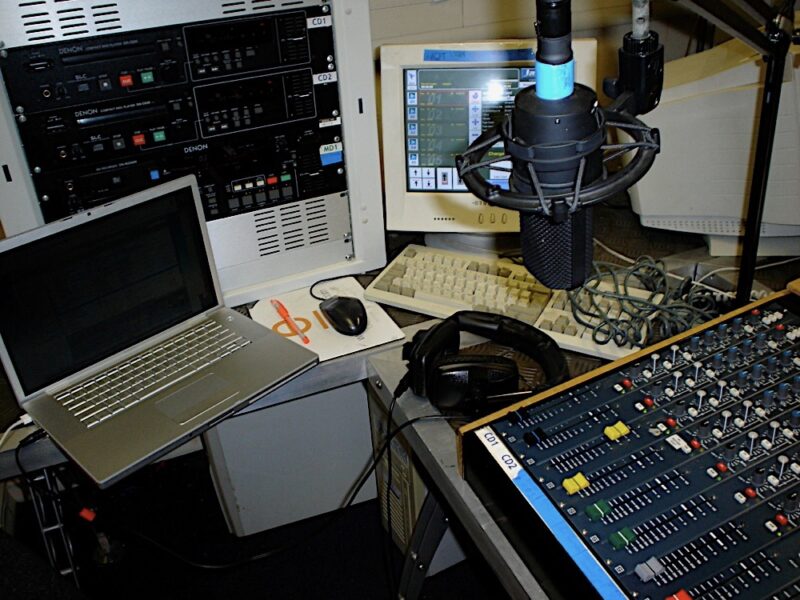
DJ booth from WPGU in the early 00s.

While we would never tell you to stop listening to Freeform Portland, we do have more than one love when it comes to community radio. There’s nothing quite like turning the dial on a long drive, ears tingling as stations crackle in and out of range, searching for something that makes you nod your head. Or landing in a new city, popping into a bar, and seeing a sticker for a radio station plastered on the bathroom wall (or toilet seat). Music ties us together, beyond language, beyond culture, beyond a single place. The melodies seep into our souls and change us in ways that are hard to articulate. It’s why the airwaves can be a sacred place for many of us, because someone has taken the time to find and play songs they care about – and if you’re here, you’ve stuck around to listen (at least once in a while).

Today, we want to share a handful of our favorite radio stations from around the world. The ones that have stuck with us, have challenged us, have changed us. Our hope is that you find something here, give it a chance, maybe find something you love, and when you do, share it back with us. 

So here we go… and don’t forget to tune into Missed Connections every other Tuesday from 6AM to 8AM on your very own, Freeform Portland (or catch up on past episodes on Mixcloud). 

Cashmere Radio (Berlin)

It’s hard to even begin describing what Cashmere is beyond being a true example of freeform radio. Every block is something wildly different, and almost always something amazing and unexpected. Based out of Berlin, it is surprisingly (or maybe not so surprisingly) English forward. They don’t publish track IDs, but past shows are available on SoundCloud. 

A good starting point is OBSCURED #47 entitled “Faith”. It’s a mix of dark wave, noise, and post-punk. Perfect for those gloomy Portland mornings. 

Radio Paradis (Paris)

A radio station run out of an apartment in Paris’ 18th arrondissement. It doesn’t get more DIY than that. Also loving the fact that they have a page on their website detailing the specs of their sound system that they use for public events and how to get in touch with them for events. Some real hi-fi nerd stuff here

We’re really into Panorama Radio w/ Soulist at the moment. Hearing a lot of keepers in his mixes. 

KFJC (Los Altos)

“Radio that’s weirder than you, but not by much.” If that doesn’t sell you, I’m not sure what will. So, if you’re struggling to find something to listen to, give our friends down in the Bay Area some love. 

KMHD (Portland)

Our Portland neighbors broadcasting in collaboration with Mount Hood Community College have some of the best funk and soul adjacent jazz programming in the country (and probably around the world). If you need an entry point, start with The Headnod Show by Headnodic. A weekly deep dive into the music that’s influenced, inspired, and been sampled by many of our favorite artists. 

WFMU (Jersey City)

The longest (currently) running freeform radio station in the US. It’s hard not to take pride in my hometown station (E here), a true underdog story. It’s a reminder that great art lives everywhere – ESPECIALLY in the shadows of big cities. 

If you’ve never listened to “Downtown Soulsville” with Mr. Fine Wine, set a calendar invite for this Friday, because it’ll change your life. 

KPFT (Houston)

Home to our favorite hip hop show on the radio dial: “Quantum Leap.” Hosts GRANDfathercloc and Dopeako play an eclectic mix of old and new hip hop with a bit of history sprinkled in. 

Houston has a rich musical history and this station does a good job of platforming musicians from Texas and around the world. 

Kiosk Radio (Brussels)

This recommendation is coming to you by way of DJ Ricardo Wang, host of “What’s This Called?”, which airs on Saturday nights at 6PM Portland time. Kiosk is a small Belgian station that plays a lot of electronic music, but not only electronic music. It’s literally run out of a wooden kiosk in Parc Royal with just enough room for a DJ and a few friends. 

Need somewhere to start? How about some French hip hop with Le Four.

Radio Panini (Copenhagen)

Found this station purely by accident while walking around Copenhagen. I (E) was on my way to grab a beer at Mikeller, and on the way over I heard house music thumping from inside a small cafe next door. Turns out on weekends it’s a radio station. While they aren’t broadcasting daily, they do have live streams most weekends and an archive of past shows. 

I love the fact that Radio Panini is set up first and foremost as an in person experience for their community over food and drinks – and that they share that with the world. 

NTS (On the web and around the world)

If you only know one station on this list, it’s probably NTS. Two streams running 24-hours, 7 days a week, with a massive archive of one of a kind and offbeat shows. Shane Anderson did a great write up for 032c called “No More Ghosts, Please: On Taste and NTS Radio as an Antidote to AI Slop” that gets into what makes NTS so special. 

BEHIND THE MIC: RICARDO WANG

This interview is part of our series, “Get to Know Your DJs.”

How did you first get involved with Freeform Portland? Got kind of tired of packing and unpacking, town to town, up and down the dial…. OK, just kidding, sort of. I was at my last station before Freeform for 15 years and that was in Portland as well. And before that it was 10 years at the same station in Olympia, WA. Throw in 2.5 years in Bellingham, WA and it could probably change to “up and down I-5.” But through each station in my past there was always a struggle of one kind or another between the paid managers and the volunteer DJs. So when the buzz went around that there was a Portland station where everybody volunteers, I had to listen and learn how to become involved! 

What does being a part of the Freeform Portland community mean to you? I LOVE listening to Freeform. It is on right now as I type this. The other programmers give so much to learn from. Everybody at Freeform does their show as a labor of love, and it shows. I’ve made some great friends at the station and really appreciate the constant effort to bring in new people who want to try doing radio. 

Tell us about your show! “What’s This Called?” began in 1993 and has run continuously ever since, except for a two-year hiatus when I relocated from Olympia to Portland and found a new station to host it. I play Expunkimental Music. Meaning that while Sun Ra is my very favorite artist, I first learned of him because the MC5 covered “Starship.” Postpunk greatness such as Sonic Youth and Einsturzende Neubauten connected with me first in my late teens (which is also when I first became a DJ). It led to reverse engineering the other genres that the contemporary underground rock bands were pulling sounds from. I started the Olympia Experimental Music Festival in 1995, which ran until Covid stopped it 25 years later, and I was involved with every show as a player, booker, or both. From the start it grew out of the Oly DIY punk scene. So “What’s This Called?” has always been a show where you might hear noiserock, free jazz, plunderphonics, and chance determinist compositions–all in the same set. Since coming to Freeform in 2018, I’ve really taken to the station’s ethos of giving a voice to disenfranchised artists and populations and it has made the show grow immensely. I make an effort to play sound art from all over the world which includes all genders and orientations. I also let my two kids help do the show quite frequently these days, as they come up with ideas and artists to play I never would have! They’ve been in radio studios their entire lives.

Outside of radio, what are your other interests or hobbies? I love cooking as a cathartic release. I read massive amounts of science fiction literature, which has led me to also become obsessed with the Traveller tabletop RPG. I run a weekly Traveller campaign called Outside the Imperium. I play and record music with experimental (also really, expunkimental!) music group The Dead Air Fresheners since 1996ish, and we have a vanity label that also puts out other artists called Kill Pop Tarts. Our studio in my garage is called The Elusive Hangar. I take photos constantly and use them in digital art. My family has seven cats (mostly rescues) Ava, Mewpers, Sylvie, Osiris (Ozzie), Elric, Mateo, and Zephie. 

“What’s This Called?” airs alternating Saturdays from 6 – 8 p.m.

BEHIND THE MIC: MEET SANJO

This interview is part of our new series, “Get to Know Your DJs.”

What inspired you become a DJ?

Mix tapes were a huge passion of mine when I was growing up. I used to queue up for songs on the radio late nights and make mixes for crushes and friends. I started losing that later in adulthood when tapes, then CDs, and then free downloads all kind of went away for the most part. I started fixating on getting a DJ set-up to more or less listen to my records more actively, like a live mix tape by myself at home. Coincidentally, right after I got my set-up the way I wanted, I saw a Freeform Portland DJ recruitment flyer and thought, “Why not?” Here I am.

Tell us about your show!

Beginner’s Mind Riot is primarily an exploration of psychedelic music—a bit of a catch-all for 60s/70s psych, freakbeat, prog, krautrock, jazz, acid rock and soul. I play other stuff for sure, but that’s the bread and butter of it. Not only is “psych” music massively foundational for nearly all contemporary genres from hip-hop samplings to punk rock anti-authoritarianism to most of indie’s emotional and shoegazing fundamentals—it’s also got a lot of something we don’t have enough of these days in my opinion: a quest for insight/right mind. I don’t hear a lot of new music actively seeking an internal presence of mind that wants to engage the self and the world both positively and consciously. I don’t hear a lot of new stuff that’s willing to live in that space. I think pure anger, pure nihilism, pure coldness, pure overwhelm, or on the other hand, pure party, pure vapidness, pure “good vibes” are all kind of lost on me. Psych music, and soul for that matter, have lyrical and musical dimensions that speak with an unmatched warmth to constant change, transformation, and struggle. So that’s what I try to get at with my show!

What do you love most about DJing?

I love the songs I find and I want to share them and hope people feel what I feel or dig on it the way I do. I love getting to throw things out there for anyone listening. I love having a show and DJing out because it takes that idea of making someone a mix tape out into the world at large. I DJ like it’s more of a listening party than a dance party. There’s also an essence to anything I play: It’s gotta have a hook/riff/break/moment!

What advice can you offer to aspiring DJs?

Unless you really love just one thing, don’t stick to one style, whether it’s collecting or DJing. Plenty of DJs just want to rock a party with disco and boogie or whatever. Nothing wrong with that, but I’d challenge any DJ to push the boundaries of what a set can sound like. It’s like movies to me: If you want a non-stop, adrenaline-fueled action flick, that’s can be awesome, but that’s not the only thing people need or deserve to see. If all that appears in theatres were action flicks, that would end up being all people expect going to the movies.

I feel the same about the DJ booth. Music is here to engage in not just our senses, but our sensibilities. You can dance to it or have it in the background sure, but music can also evoke deep thinking, complex feelings, memories, ideas, inspiration, conversations, touches with history, and expansion. Always consider expanding a listener. The honor of people listening is also a responsibility and a platform. Try to give listeners something to take with them.

Listen to Beginner’s Mind Riot every other Friday from 8 – 10 p.m.

BEHIND THE MIC: MEET MAMMAL IN CRIME

How did you first get involved with Freeform Portland? My old pal was one of the original founders of the station and invited me to participate. I’ve been involved off and on since 2017. 

What does Freeform Portland mean to you? Live, volunteer-driven, non-commercial radio is a rare breed these days. I’m a big advocate of keeping it alive and well, building community through the aural landscape, and playing eclectic tunes that fall outside of the mainstream. Freeform Portland is an incredibly imaginative group of humans. There’s not a single time that I’ve tuned into the station and not found myself in a place of discovery. It’s nuanced and totally unpretentious. 

What inspired you to become a DJ, and what do you love most about it?
I’ve been mixing tapes, CDs, and playlists most of my life–for parties, for openings, for coffee shops and bars, for friends and lovers. Being a DJ seemed like a natural next step. I love sitting and/or dancing in the studio while dedicating two solid hours to the earscape, without distractions. It’s a very present experience. 

Mammal In Crime, broadcasting every other Wednesday from 4 – 6 p.m.

Tell us about your show! It’s called Bachelard’s Panty Drawer and it’s a theme-based show that includes music, musings, readings, and sometimes interviews.  

Who are some of your favorite artists or bands? I like a wide range of music from all over the world, from many eras: funk, disco, pop, punk, classical, metal, wave, goth, soul, hip hop, old country, folk, jazz, experimental, blues, minimal, meditative, and so much more. If I were to look back and assess which artist I’ve played the most on my show it would probably be Nina Simone. She’s a force.   

What was your most memorable radio show? The one I did most recently on the olfactory. I played smell-themed songs, read smell-themed excerpts from poems and essays, and had a sniff-off with an ASMR pro. It was a true smell-o-radio highlight. 

What record can you listen to over and over and never tire of? There are so many so it’s hard to choose, but the one album I’ve listened to the most in my life is probably Yo La Tengo’s “I Can Hear the Heart Beating as One.”

What advice would you give to aspiring DJs? Have fun! Because when you’re having fun,  listeners can feel it. 

Outside of radio, what are your other interests or hobbies? Writing, dancing, cooking with plants, growing plants, walking amongst plants, diatoms, shamatha-vipashyana meditation, elephant umwelt, desert camping, star ogling, mud wrestling, cuddling with my partner and child and canine, traveling, reading creative non-fiction, floating on water, doodling, sending real mail, visiting dusty museums, taking pictures of flowers, watching documentaries, seeing folk art, crooning, playing instruments, and so much more. Life’s a mega-wonder. 

TUNE IN TO BACHELARD’S PANTY DRAWER 
EVERY OTHER WEDNESDAY FROM 4 – 6 P.M.

BEHIND THE MIC: MEET JEFF ROSS

When Freeform Portland first broadcast eight years ago, at the beginning of April 2016, it changed the Portland radio landscape for the better. My first show was April 5 that year, and I’m happy I was part of the initial schedule.

I chose “It’s a nice world to visit” as my radio show name because it reflects a less cynical nature. Over the years I’ve tried my best to honor that ideal. As circumstances in my personal life have changed, my show has moved to a few different days and time slots. You can hear it now every Saturday afternoon at 2 p.m.

Jeff Ross in the studio

I’ve made a commitment to the station and more importantly, the listeners: I endeavor to do a new show every week. When you tune in at 2 p.m. on Saturdays, you’ll hear two hours of music selections that aren’t the same as the prior week. The show I present has no higher purpose than to be entertaining. If you happen to tune in to my show, and crack a smile, tap your foot to the beat, enjoy a segue from one song to next, or hear a song you might never have heard before and are intrigued by that song, well then, I’ve done a good job.

Freeform Portland broadcasts 24 hours a day, seven days a week, and has a full schedule of all sorts of music, presented by a number of volunteer DJs—emphasis on “volunteer.” Everyone at Freeform Portland volunteers their time, energy and knowledge by choice, because they want to. 

My time at Freeform Portland has been my best experience in radio because of the people who are dedicated to making great radio, and a great radio station. The volunteer nature of the station is one of the best aspects, as it helps to ensure that there are always new voices and ideas coming to the station, adding new shows and diversity of sounds for our listening audience.

I’m among a handful of people who were a part of the first schedule and remain with the station. And I hope that years from now I’ll still be a part of Freeform Portland. I’ve loved music since I was a small child. And as I collected music, I learned the joy of sharing music. Thank you everyone who has listened to my show and supported Freeform Portland over the years. It’s truly you who makes it possible for me to do my weekly show, and for that I’m extremely grateful and appreciative. 

Listen to Jeff Ross’ “It’s a nice world to visit” 
on Saturdays from 2 – 4 p.m.