

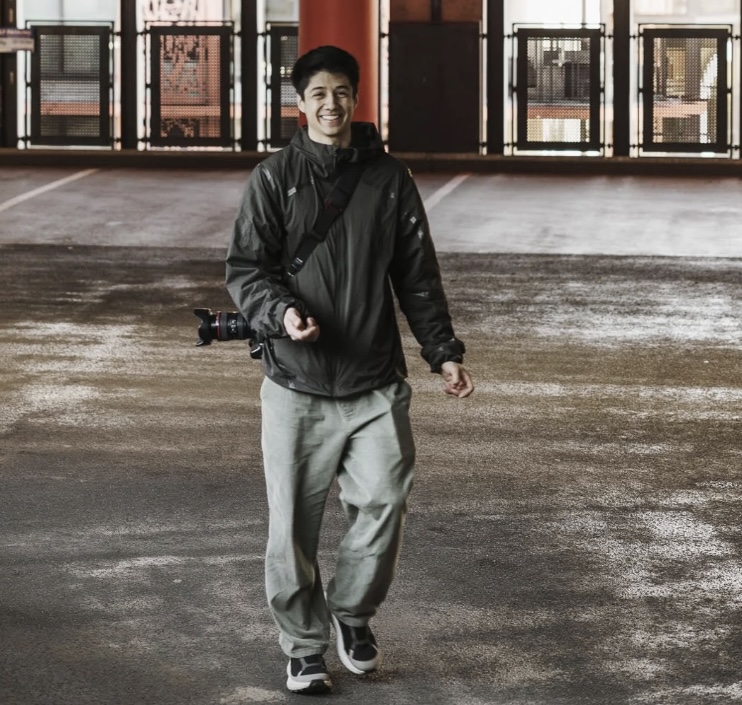
(Photo credit: @halle_adrian)
A few weeks back, Chris and I (DJs CG+E) had the pleasure of interviewing Andrés Botero Giraldo, a photographer and zine creator based in Vancouver, BC, for Missed Connections. Andrés is many things, but maybe most importantly, he’s a music nerd deeply embedded in Vancouver’s underground house and electronic music scene, which he explores in his zine, Off Tempo. There’s only so much you can cover in an hour, so we decided to post the long-form interview with Andrés here on the Freeform blog.
He came through with a killer set of all-Vancouver producers, and we spent the rest of the time geeking out about the scene up there, the labor of love behind making a physical zine (in a digital world), and what it means to document a community you have to show up to find.
If you’d like to listen to the episode, you can find it on MixCloud. And to see more of Andrés’s work, here’s a link to his site.
Note: This transcript has been edited for readability.
So, Andrés, tell us a little about yourself. How’d you wind up in Vancouver?
I came here straight from Colombia in 2021, September—from Medellín, right in the middle of COVID. I actually missed my first flight because I took the wrong COVID test, which was a fun start. But I made it, like three days late for school. I took 3D animation for CG film and video games. First year I was having fun, second year I specialized in 3D modeling and building assets digitally.
I graduated in April 2023, and that’s when the entertainment industry in Vancouver—really all of North America—fell off. Layoffs, strikes everywhere, barely any job offers. Senior artists who had jobs were losing them, and they were applying for junior roles. So for us as new graduates, it was even harder. I tried for about a year and a half, and honestly, I wasn’t really enjoying 3D as much by that point anyway.
I’d started working at a climbing gym part-time in 2022 because I found out about bouldering and fell in love with it. I got hired in education, teaching little kids how to climb—zero experience teaching, by the way—and eventually moved to the front desk. I picked up a camera in 2020, started taking photos of friends bouldering out in Squamish, and that just kept growing.
Then I started volunteering for a clothing designer named Dana Lee Brown. She’s based on Bowen Island, does this incredible farm-to-loom work with organic fibers sourced from North America. I was spending my Tuesdays there learning about textiles. So now it’s the zine, part-time at the gym, and I’ve been sending emails to labels and music media to see if there’s a fit somewhere. I’d love to work in music—not producing it, but the media side of things.
How did you first connect with the underground music scene in Vancouver?
Late 2022 is when it happened. I actually went to see Tiësto in Atlanta first, and that kind of sparked my interest in finding more shows. Then I came back to Vancouver and saw MK (Marc Kinchen), which was great. But the real moment was at a Discothèque show. They’re a promoter collective, really nice people, some of my good friends now. There was this DJ on the lineup, DJ dood—her name’s Elsa—and she played this Kerri Chandler track called “Atmosphere.” The original version is called “Track One.” And once I heard that, I was like—this is it. I knew that track. I’d heard it before. But hearing it live in that room? After that night, I knew: I love house.
The second event I went to was Juan Atkins and Delano Smith. OGs of Detroit techno. That show opened up a whole different side of the sound.
I’ve only been here five years, so I’m not someone who can speak on the full history. But being in those places, and then hearing what’s come in the last two years—music doesn’t change, I think you just discover new sounds and you start to alter what kind of events you want to go to. There’s a lot happening in the city, and there’s still a lot I haven’t explored. There really is something for everyone.
What’s unique about the Vancouver scene right now?
A lot of people say getting into it is either something you seek out or something that finds you. A friend brings you to a show, you end up liking it, and maybe you start going to more. But you also have to give it a shot. I used to listen to Skrillex, David Guetta, Martin Garrix. And there’s nothing wrong with that. As Max Ulis says in the zine (Off Tempo), it’s a point of entry for people to discover the underground sound. Vancouver’s the same way: it’ll find you.
What’s really important to say is that people in this scene make things for the community, not for profit. You compare these spaces to the mainstream clubs on Granville Street (except Gorgomish, amazing place btw)—those places are playing Top 100, where people go to get drunk, whatever. But that’s not what we’re looking for. We’re looking for a sound. And honestly, a lot of people don’t feel safe in those bigger clubs.
House music comes from gay culture—that’s the community that brought the music—and I don’t think that side of things is always respected in mainstream spaces. Where people do feel safe is in the more hidden venues, the ones that actually care about people’s safety and bring good curation for the sound.
Lately in Vancouver, there’s a tough situation happening. The VPD and fire department are kind of joining forces to shut down underground and DIY venues that don’t have full legal permits. They say it’s related to the FIFA World Cup coming, but a lot of people don’t buy that. It feels more like clearing the way for venues that will bring in money.
Resident Advisor actually ran a piece about it. There’s a venue called Fortress, run by a woman named Crystal, that does it right—limited capacity, legal status, community talks during the week, shows on the weekends. But even there, cops showed up during a show in December. It’s been going on for two or three years now, and it’s really sad.
There’s a tension between the underground feeling kind of exclusive—maybe even like gatekeeping—and these spaces being genuinely safe for people who need them. What do you think about that?
It might sound poetical, but I think the fact that people have a deeper love for the sound and the music is what creates safe spaces. It’s kind of self-gatekeeping. People who are just there to get drunk or whatever, they’re usually not going to end up in these spaces. There’s not a lot of work you have to do to keep them out.
If you’re the kind of person who’s going to feel good in that place, you’ll find it. It’ll happen. Because you know those spots where you walk in and you’re just not feeling it—you’re not comfortable—so you go looking for something else, and once you find the right one, you just keep going.
The people who run these spaces know who to hire, too. Jamie (Big Zen) talked about this bouncer named Jumbo in the first issue (of “Off Tempo”). Jumbo was friends with everybody, but he’d do his job when something felt off. If someone walked up and the vibe wasn’t right, they weren’t getting in. It’s about bringing a good persona. Everyone’s there to have a good time—to listen, to dance. And some people are showing parts of themselves in these spaces that they don’t comfortably show outside. That’s why they feel safe—because they know they’re going to be respected.
You mentioned your approach to photography—no flash, staying in the shadows. Tell us about that.
That’s the thing. When I’m allowed to take photos at shows, my approach is: never flash. I always want to be in the shadows. If you see me taking a photo, that’s fine, but I don’t want you to feel like I’m there.
People are already nervous about cameras in these spaces; worried someone’s going to pull out a phone and put them on social media or whatever. I want to respect that. These are places where people go to be authentically themselves, and I’m not trying to disrupt that.
So let’s talk about Off Tempo. How did the zine come about?
I had a lot of time on my hands, and the only things in my head were music and photography. I was diving into Wikipedia at work, reading artists’ bios, trying to find out where these people came from, what inspired them, where they were born. I realized Vancouver had so much [going on], but I just wasn’t finding information about a lot of these artists online. So I thought—I want to know [more], and maybe other people do too. What better way than to combine photography and my love for music?
I’d reach out to people, interview them, take their photos. More than a formal interview, though—I wanted to take them out of their comfort zone a little. We’d still talk about music, but I wanted to know about them. Things you can’t find online.I knew that people in this world value physical things, so I didn’t really want to post it online. I mainly wanted to make it a zine—something people could hold, something that felt like you owned a little piece of information that not everybody has.
The first person I texted was Ray (DJ Dairy Free) and I’m so glad he said yes. He gave me a chance. At the time he was working at this listening bar called Bleach, and we did the interview there. Honestly, it was my first time running an interview in English. I felt somewhat comfortable, but you never really know what’s going to happen. After that first one, though, I knew it could be done.
How much work actually goes into creating one of these?
The first issue took about half a year. I started around April and it wasn’t published until I got back from Bass Coast in the summer. The hardest part was the back-and-forth of scheduling. These people are busy. Most DJs have actual day jobs—DJing isn’t really paying the bills, at least not for most of the people I interviewed. Max Ulis is probably the only one doing music full-time out of the people I talked to.
Then there’s the credibility piece, which I was nervous about at first. Once that first interview was done, I could tell people: hey, I did this, here’s what it looks like. Once it was actually printed and sitting on the shelves at the shops, that changed everything—people could see it was a real thing. I could approach people for issue two and say, I don’t know if you’ve seen this, but I’d love to have you in the next one.
For each person in the zine, I try to find a record that I think they’d like and give it to them. Finding the right one is tricky sometimes, but it’s fun. That’s one of the best parts.
What’s the hardest part?
The transcribing is probably the most time-consuming part. I use AI to get the audio to text as a starting point, but you still have to listen to it—some words are too specific for the transcription to catch, and it gives you everything literally as it was spoken, so you have to rework it to make it read well on the page.
What was the reaction when the first issue dropped?
It was kind of crazy. Jamie (Big Zen) was the last person I interviewed for issue one. After it came out, he asked me if I still had copies and I told him they were at Audiopile. He was like, no, they’re gone — sold out. I’m like, what? I literally put them there three days ago. So I went to check, and yeah, they were gone. That was wild.
I’m holding a copy of issue two right now, and I have to say that the quality is legit. The paper weight, the photos, the design. In a world where everything is digital, why go physical?
I just wanted to show my true love for the music and actually do something with my time. Maybe eventually it’ll be something on my résumé, who knows?
I think people in this scene give a better value to physical things. If you want to find the music, you can find it all online, but if you want to know more about the people, about the stories behind the sound, you’re kind of going on a treasure hunt. You’ve got to go to an actual record shop or a bookstore to pick it up, and I love that.
You mentioned discovering a book that blew your mind—a collection of zines from the late ’80s documenting Pacific Northwest dance music culture. Tell us about that.
This came up when I was interviewing someone named Farshad for a possible future issue. He told me about this zine called Discotext—Robert Shea, Michael Shea, and Debbie Jones were DJs at Graceland in Vancouver, and they started putting it out in 1988. It ran all the way to 1990, and they compiled every issue into a book. I just got it in the mail a couple days ago. I wish I’d known about it before I started my project, but even finding out about it now it’s such an inspiration to keep going. It shows that back then there was still a drive to make physical work and give a voice and vision to this scene. That really resonated with me.
You’re learning Japanese. What draws you to that culture?
I think maybe it starts the same way for a lot of people — I grew up watching anime. Naruto, One Piece, I binged all of it during COVID. But in the last couple of years before I moved to Vancouver, I got more interested in the culture itself. The discipline. The way people carry themselves. The architecture. And the language is just such a challenge — but it sounds beautiful.
Once I got here, I started taking in-person classes about a year and a half ago, and I started meeting more Japanese people. That motivated me even more. I have a big love for handmade things, and the fact that Japan still has such strong protections around those kinds of crafts — I’d love to go there and learn more.
When it comes to music, Japanese selectors are just top-notch. Japanese music is beautiful. I have a lot of respect for it, and I want to find out: how do you get so good at this?
Last one. What’s your philosophy on AI and art?
I think, coming from a 3D design background, you can usually tell when something’s made with AI—it’s getting harder, but it’s still pretty easy. When it comes to music, people in this community definitely aren’t having it. It’s almost unanimous—AI-generated music is not going to be respected. You’re not going to get the same response.
I think you have to see the good parts and the bad parts. If it helps you with time—great. I was taking a French class online, and there was an AI transcription of what the teacher was saying right next to her camera. That was super useful. I could reference it after class. Things like that make sense.
When it comes to showing something as your own work—your photos, your design, the zine—if you didn’t really do it, it’s not worth it. My photos are 100% what I shot. There might be a cable in the background or something I didn’t love, but that’s the real photo. That’s the essence of it.
Thanks so much for being on the show with us, Andrés. If you’re ever down here in Portland, come to the studio—we’ll spin some records.
Thanks a bunch, guys. That means a lot to me. I think in this culture, you don’t always find a lot of people doing this kind of thing, but you don’t need a lot—you just need the right amount.
When I got your email, I honestly thought it was spam from my website, but when I read it, I was like—wow, this is actually legit. It’s so motivational that people actually see these projects and they mean something. Getting these invitations opens doors, not just for me, but for other people to hear things. So thank you.
Keep an eye out for Off Tempo (Issue 03)… coming soon!
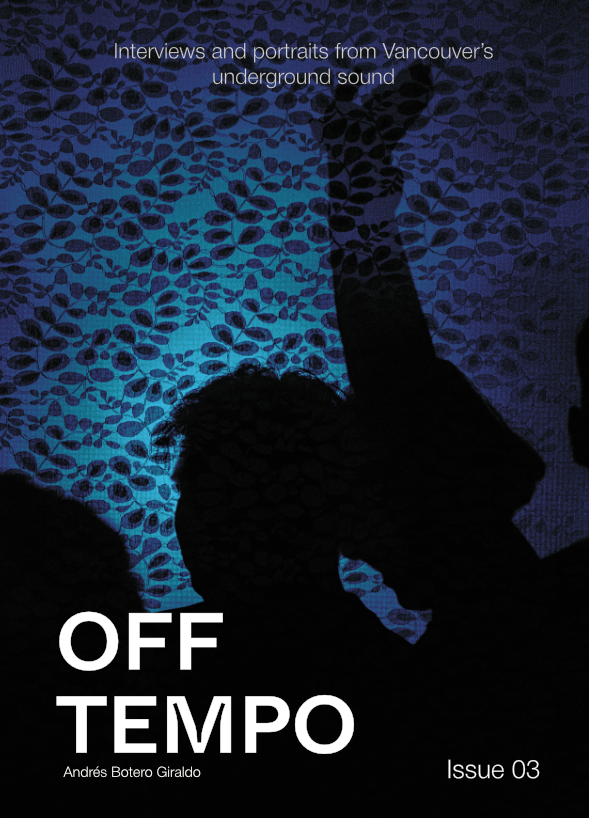
Andrés Botero Giraldo is a photographer, designer, and zine creator based in Vancouver, BC. Off Tempo is available at record shops around Vancouver. You can find more of his work at andresboterog.com.
